Question
1 Curie is equal to
|
(a) 3 |
(b) 3.7 |
|
(c) 5 |
(d) 3.7 |
1 Curie is equal to
|
(a) 3 |
(b) 3.7 |
|
(c) 5 |
(d) 3.7 |
(d) 3.7  disintegrations/sec
Generate a complete, print-ready paper with questions like this in minutes — across 16+ boards, with answer keys.
A ray of light travelling inside a rectangular glass block of refractive index  is incident on the glass–air surface at an angle of incidence of 45°. The refractive index of air is 1. Under these conditions the ray
|
(a) Will emerge into the air without any deviation |
|
(b) Will be reflected back into the glass |
|
(c) Will be absorbed |
|
(d) Will emerge into the air with an angle of refraction equal to 90° |
Crystal structure of NaCl is
|
(a) Fcc |
(b) Bcc |
(c) Both of the above |
(d) None of the above |
What is the path difference of destructive interference
|
(a) nl |
(b) n(λ + 1) |
(c) |
(d) |
A galvanometer of 10 ohm resistance gives full scale deflection with 0.01 ampere of current. It is to be converted into an ammeter for measuring 10 ampere current. The value of shunt resistance required will be
|
(a) |
(b) 0.1 ohm |
(c) 0.5 ohm |
(d) 1.0 ohm |
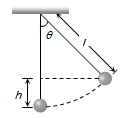
A simple pendulum with bob of mass m and conducting wire of length L swings under gravity through an angle 2θ. The earth’s magnetic field component in the direction perpendicular to swing is B. Maximum potential difference induced across the pendulum is
|
(a) 2BL sin |
(b) BL sin |
|
(c) BL sin |
(d) 2BL sin |
A particular emission line, detected in the light from a galaxy, has a wavelength  , where
  is the proper wavelength of the line. The galaxy distance from us
|
(a) 1.6 |
(b) 0.97 |
(c) 2.4 |
(d) 1.62 |
Which of the following transition will have highest emission wavelength
|
(a) n = 2 to n = 1 |
(b) n = 1 to n = 2 |
(c) n = 2 to n= 5 |
(d) n = 5 to n = 2 |


