MCQ
1 Curie is equal to
  • A
    $3 \times 10^7$ disintegrations/sec
  • B
    $3.7 \times 10^7$ disintegrations/sec
  • C
    $5 \times 10^7$ disintegrations/sec
  • $3.7 \times 10^{10}$ disintegrations/sec

Answer

Correct option: D.
$3.7 \times 10^{10}$ disintegrations/sec
(d) $3.7 \times 10^{10}$ disintegrations/sec

Need a full question paper?

Generate a complete, print-ready paper with questions like this in minutes — across 16+ boards, with answer keys.
Start Generating Free

Similar questions

The potentials of the two plates of capacitor are +10V and –10 V. The charge on one of the plates is 40 C. The capacitance of the capacitor is
A $10\, V$ battery connected to $5\,\Omega $ resistance coil having inductance $10\, H$ through a switch drives a constant current in the circuit. The switch is suddenly opened and the time taken to open it is $2\, ms$. The average $emf$ induced across the coil is
A battery of $e.m.f.$ $10\, V$ and internal resistance $0.5\, ohm$ is connected across a variable resistance $R$. The value of $R$ for which the power delivered in it is maximum is given by ......... $ohm$
A proton is accelerated through 50,000 V. will increase Its energy by
The output of $OR$ gate is $1:$
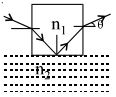
$A$ cubical block of glass of refractive index $n_1$ is in contact with the surface of water of refractive index $n_2$. A beam of light is incident on vertical face of the block (see figure). After refraction, a total internal reflection at the base and refraction at the opposite vertical face, the ray emerges out at an angle $\theta$ . The value of $\theta$ is given by :
Various optical processes are involved in the formation of a rainbow. Which of the following provides the correct order in time in which these processes occur?
The fact that electric charges are integral multiples of the fundamental electronic charge was proved experimentally by
Equal torques act on the discs $A$ and $B$ of the previous problem, initially both being at rest. At a later instant, the linear speeds of a point on the rim of $A$ and another point on the rim of $B$ are $v_A$ and $v_B$ respectively. We have:
 A potentiometer circuit has been set up for finding the internal resistance of a given cell. The main battery, used across the potentiometer wire, has an emf of $2.0\,V$ and a negligible internal resistance. The potentiometer wire itself is $4\,m$ long. When the resistance $R,$ connected across the given cell, has values of  $(i)$ infinity $(ii)$ $9.5\,\Omega$ the balancing lengths on the potentiometer wire are found to be $3\,m$ and $2.85\,m,$ respectively. The value of internal resistance of the cell is ............... $\Omega$