MCQ
$10\,g$ of $CaCO_3$ contains
- A$10\,moles$ of $CaCO_3$
- ✓$0.1\,g$ atom of $Ca$
- C$6\times 10^{23}$ atoms of $Ca$
- D$0.1$ of equivalent of $Ca$
$ \text { Moles of } \mathrm{CaCO}_{3} \text { in } 10 \,\mathrm{g} =\frac{10}{100} $
$=0.1\, \mathrm{mol}=0.1 \,\mathrm{g} \,\text { atom }$
Generate a complete, print-ready paper with questions like this in minutes — across 16+ boards, with answer keys.
(Where $a _{0}=$ Bohr radius $52.9 pm$ ) is $km s ^{-1}$
(Given : Mass of electron $=9.1 \times 10^{-31} kg$, Planck's constant $h =6.63 \times 10^{-34} \;Js$ )
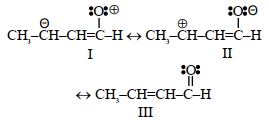
Reason : Alkyl halides are less reactive than acyl halides.
$PCl _{5}( g ) \rightleftharpoons PCl _{3}( g )+ Cl _{2}( g )$
$5$ moles of $PCl _{5}$ are placed in a $200$ $litre$ vessel which contains $2\, moles$ of $N _{2}$ and is maintained at $600 \,K$. The equilibrium pressure is $2.46 \,atm$. The equilibrium constant $K _{ p }$ for the dissociation of $PCl _{5}$ is $......\,\times 10^{-3}$. (nearest integer)
(Given: $R =0.082\, L \,atm \,K ^{-1} \,mol ^{-1}$ : Assume ideal gas behaviour)