MCQ
Image
  • A
    1-Bromo-2-ethyl-2-methylethane
  • 1-Bromo-2-methylbutane
  • C
    2-Methyl-1-bromobutane
  • D
    1-Bromo-2-ethylpropane

Answer

Correct option: B.
1-Bromo-2-methylbutane
(b) 1-Bromo-2-methylbutane
Explanation: First, we need to identify the longest carbon chain. Once we do that, the actual structure should read $CH _3- CH _2$ $- CH \left( CH _3\right)- CH _2- Br$. - Br , the functional halide group is attached to the first carbon atom (1- Bromo), so we start the numbering from that position. The methyl group branch is bond to the second carbon atom in the chain(2-methyl). The number of carbons in the unbranched parent chain is four, thus giving the name butane. The IUPAC is named 1-Bromo-2methylbutane.

Need a full question paper?

Generate a complete, print-ready paper with questions like this in minutes — across 16+ boards, with answer keys.
Start Generating Free

Similar questions

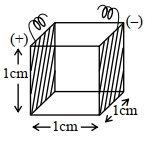
A conductivity cell with two electrodes (dark side) are half filled with infinitely dilute aqueous solution of a weak electrolyte. If volume is doubled by adding more water at constant temperature, the molar conductivity of the cell will -
$KMn{O_4}$ reacts with ferrous sulphate according to the equation

$MnO_4^ - + 5F{e^{2 + }} + 8{H^ + } \to M{n^{2 + }} + 5F{e^{3 + }} + 4{H_2}O$

Here $10\,ml$ of $0.1\,M$ $KMn{O_4}$ is equivalent to

Which will give same osazone when treated with phenyl hydrazine ?

$(A)$ Glucose  $(B)$ Gulose
$(C)$ Fructose  $(D)$ Maltose
$(E)$ Mannose
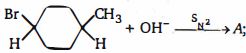
The product $A$ is
Among the following pairs of ions, the lower oxidation state in aqueous solution is more stable than the other in
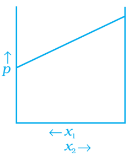
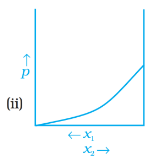
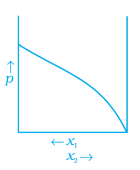
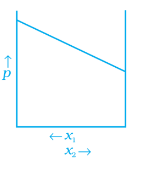
For a binary ideal liquid solution, the variation in total vapour pressure versus composition of solution is given by which of the curves?

$i.$$iii.$$iv.$​​​​​​​
Consider the acidity of the following carboxylic acids:
(i) PhCOOH
(ii) $o - NO _2 C _6 H _4 COOH$
(iii) $p - NO _2 C _6 H _4 COOH$
(iv) $m - NO _2 C _6 H _4 COOH$
Which of the following (decreasing) order is correct :
Which of following is not incorrect ?

$(i)$ ter. butyl chloride easily hydrolysed to gives alcohol

$(ii$) sec. alcohol gives blue colour in victer-meyer test

$(iii)$ $IUPAC$ name of (figure) is $3-$ methylpentan $-2-$ ol

$(iv)$ alcohol release $H_2$ gas with Grignard reagent

Electrophilic substitution of with bromine gives
Which is the most suitable reagent for the following transformation ?

$\begin{array}{*{20}{c}}
  {\,\,\,\,\,\,\,\,\,\,\,\,\,\,\,\,\,\,\,\,\,\,\,\,\,\,\,\,\,\,\,\,\,\,\,\,\,\,\,\,\,\,\,\,\,\,\,\,\,\,\,\,OH} \\ 
  {\,\,\,\,\,\,\,\,\,\,\,\,\,\,\,\,\,\,\,\,\,\,\,\,\,\,\,\,\,\,\,\,\,\,\,\,\,\,\,\,\,\,\,\,\,\,\,\,\,\,|\,\,} \\ 
  {C{H_3} - CH = CH - C{H_2} - CH - C{H_3}} 
\end{array}$  $\longrightarrow $    $C{H_3} - CH = CH - C{H_2}C{O_2}H$