MCQ
.
  • A
    Nucleophilic addition
  • B
    Nucleophilic substitution
  • C
    Electrophilic addition
  • Electrophilic substitution

Answer

Correct option: D.
Electrophilic substitution
d
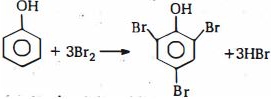
$(d)$ Aromatic electrophilic substitution.

Need a full question paper?

Generate a complete, print-ready paper with questions like this in minutes — across 16+ boards, with answer keys.
Start Generating Free

Similar questions

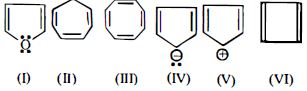
Which of the following compounds are antiaromatic
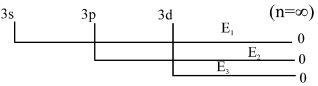
For $H-$atom, the energy required for the removal of electron from various sub-shells is given as under :

The order of the energies would be :

Wavelength of spectral line emitted is inversely proportional to
Match List$-I$ with List$-II$

List$-I$ Test/Reagents/Observation(s) List$-II$ Species detected
$(a)$ Lassaigne's Test $(i)$ Carbon
$(b)\;Cu ( II )$ oxide $(ii)$ Sulphur
$(c)$ Silver nitrate $(iii)\;N , S , P ,$ and halogen
$(d)$ The sodium fusion extract gives black precipitate with acetic acid and lead acetate $(iv)$ Halogen Specifically

The correct match is

Assertion : Acetylene on reacting with sodamide gives sodium acetylide and ammonia.

Reason : $sp$ hybridised carbon atoms of acetylene are considerably electronegative.

Assertion : Buffer system of carbonic acid and sodium bicarbonate is used for the precipitation of hydroxides of third group elements.
Reason : It maintains the $pH$ to a constant value, about $7.4.$
$1\ mol$ of $N{H_3}\left( {\gamma  = 4/3} \right)$ gas at $27\,^oC$ is expanded under reversible adiabatic condition to make volume $8\ times$ . Calculate work done.....$cal$
An accelerated electron has a speed of $5 \times 10^{6} \,\mathrm{~ms}^{-1}$ with an uncertainty of $0.02\,\%$. The uncertainty in finding its location while in motion is $x \times 10^{-9}\, \mathrm{~m}$. The value of $x$ is $......$ (Nearest integer)

[Use mass of electron $\left.=9.1 \times 10^{-31}\, \mathrm{~kg}, \mathrm{~h}=6.63 \times 10^{-34}\, \mathrm{~J} \mathrm{~s}, \pi=3.14\right]$

Which one of the following has the smallest heat of combustion ?
Consider the following statements for $\overset{\centerdot \,\,\,\,\,\,\,\,\,\,}{\mathop{C{{H}_{3}}}}\,=X$ and $\overset{\centerdot \,\,\,\,\,\,\,\,\,\,}{\mathop{C{{F}_{3}}}}\,=Y$ .
$(I)$ When $X$ dimerises bond angle decreases
$(II)$ When $X$ dimerises bond angle increases
$(III)$ In $X-Y$ molecule $C-C$ bond length is less than that in $Y-Y$ molecule
$(IV)$ Bond angle in $X$ is greater than that in $Y$