MCQ
$A$ bal $A$ collides elastically with another identical ball $B$ initially at rest $A$ is moving with velocity of $10m/ s$ at an angle of $60^o$ from the line joining their centres. Select correct alternative :
  • A
    velocity of ball $A$ after collision is $5\, m/s$
  • B
    velocity of ball $B$ after collision is $5m/s$
  • C
    velocity of ball $A$ after collision is $7.5 m/s$
  • velocity of ball $B$ after collision is $5 m/s.$
Answer

Correct option: D.
velocity of ball $B$ after collision is $5 m/s.$
d

Need a full question paper?

Generate a complete, print-ready paper with questions like this in minutes — across 16+ boards, with answer keys.

Start Generating Free

Similar questions

The output of an $OR$ gate is connected to both the inputs of a $NAND$ gate. The combination will serve as a
The spectral series of the hydrogen spectrum that lies in the ultraviolet region is the
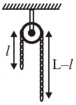
A uniform metal chain of mass $m$ and length ' $L$ ' passes over a massless and frictionless pulley. It is released from rest with a part of its length ' $l$ ' is hanging on one side and rest of its length ' $L -l$ ' is hanging on the other side of the pulley. At a certain point of time, when $l=\frac{L}{x}$, the acceleration of the chain is $\frac{g}{2}$. The value of $x$ is ........
......... $m/s^2$ is magnitude of acceleration of a block moving with speed $10\,m/s$ on a rough surface if coefficient of friction is $0.2$.
The atomic number of silicon is $14$. Its ground state electron configuration is
Which of the following is not a dimensionless quantity?
The amplitude of magnetic field in an electromagnetic wave propagating along $y$-axis is $6.0 \times 10^{-7}\,T$. The maximum value of electric field in the electromagnetic wave is:
A planet having mass $9\,Me$ and radius $4 R _e$, where Me and $\operatorname{Re}$ are mass and radius of earth respectively, has escape velocity in $km / s$ given by:(Given escape velocity on earth $\left.V_e=11.2 \times 10^3\,m / s \right)$
Surface tension is due to
A closed vessel contains $10 g$ of an ideal gas $X$ at $300 \ K$, which exerts $2$ atm pressure. At the same temperature, $80 g$ of another ideal gas $Y$ is added to it and the pressure becomes $6 atm$. The ratio of root mean square velocities of $X$ and $Y$ at $300 \ K$ is