MCQ
A compound does not react with $2,4$ di-nitrophenyl hydrazine and $Na$ , compound is
  • A
    Acetone
  • B
    Acetaldehyde
  • C
    $C{H_3}OH$
  • $C{H_2} = CHOC{H_3}$

Answer

Correct option: D.
$C{H_2} = CHOC{H_3}$
d
(d) It is not acetaldehyde or acetone as does not react with hydrazine.

It is not $C{H_3}OH$ as does not react with $Na$

Need a full question paper?

Generate a complete, print-ready paper with questions like this in minutes — across 16+ boards, with answer keys.

Start Generating Free

Similar questions

For the reaction $A(g) + 2B(g)  \rightleftharpoons  2C(g) + D(s), 2\, moles$ of $A, 3\, moles$ of $B$ and $1\, mole$ of $C$ are present in $10\,L$ vessel if $K_c$ for the reaction is $3.6$, the reaction will proceed in
The standard cell potential $\left(\mathrm{E}_{\text {cell }}^{\ominus}\right)$ of a fuel cell based on the oxidation of methanol in air that has been used to power television relay station is measured as 1.21 V . The standard half cell reduction potential for $\mathrm{O}_{2}\left(\mathrm{E}_{\mathrm{O}_{2} / \mathrm{H}_{2} \mathrm{O}}^{\mathrm{O}}\right)$ is 1.229 V .
Choose the correct statement:
Benzoic acid gives benzene on being heated with $X$ and phenol gives benzene on being heated with $Y$. Therefore $X$ and $Y$ are respectively
Aqueous solutions of $\mathrm{HNO}_3, \mathrm{KOH}, \mathrm{CH}_3 \mathrm{COOH}$, and $\mathrm{CH}_3 \mathrm{COONa}$ of identical concentrations are provided.

The pair $(s)$ of solutions which form a buffer upon mixing is(are)

$(A)$ $\mathrm{HNO}_3$ and $\mathrm{CH}_3 \mathrm{COOH}$

$(B)$ $\mathrm{KOH}$ and $\mathrm{CH}_3 \mathrm{COONa}$

$(C)$ $\mathrm{HNO}_3$ and $\mathrm{CH}_3 \mathrm{COONa}$

$(D)$ $\mathrm{CH}_3 \mathrm{COOH}$ and $\mathrm{CH}_3 \mathrm{COONa}$

Find the frequency of light that corresponds to photons of energy $5.0\times10^{-5}\, erg$
Which one of the following does not have $s{p^2}$ hybridised carbon
Which pair of elements with the given atomic numbers is expected to have similar properties?
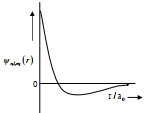
The wave function $\psi_{n / m m}$ is a mathematical function whose value depends upon spherical polar coordinates $(r, \theta, \phi)$ of the electron and characterized by the quantum numbers $n, l$ and $m_l$. Here $r$ is distance from nucleus, $\theta$ is colatitude and $\phi$ is azimuth. In the mathematical functions given in the Table, $\mathrm{Z}$ is atomic number and $a_0$ is Bohr radius.

$column 1$ $column 2$ $column 3$
$(I)$ $1$s orbital $(i)$ $\psi_{n, l, m_l} \propto\left(\frac{Z}{a_0}\right)^{\frac{3}{2}} e^{-\left(\frac{Z r}{a_0}\right)}$ $image$
($II$) $2 \mathrm{~s}$ orbital $(ii)$ One radial node $(Q)$ Probability density at nucleus $\propto \frac{1}{a_0^3}$
$(III)$ $2 p_z$ orbital $(iii)$ $\psi_{n, l m_l} \propto\left(\frac{Z}{a_0}\right)^{\frac{5}{2}} r e^{-\left(\frac{Z r}{2 a_0}\right)} \cos \theta$ $(R)$ Probability density is maximum at nucleus
$(IV)$ $3 \mathrm{~d}_{\mathrm{z}}^2$ orbital $(iv)$ $x y$-plane is a nodal plane $(S)$ Energy needed to excite electron from $n=2$ state to $n=4$ state is $\frac{27}{32}$ times the energy needed to excite electron from $n=2$ state to $n=6$ state

($1$) For the given orbital in Column $1$, the only $CORRECT$ combination for any hydrogen-like species is

$[A] (IV) (iv) (R)$   $[B] (II) (ii) (P)$    $[C] (III) (iii) (P)$    $[D] (I) (ii) (S)$

($2$)  For $\mathrm{He}^{+}$ion, the only INCORRECT combination is

$[A] (II) (ii) (Q)$ $[B] (I) (i) (S)$ $[C] (I) (i) (R)$ $[D] (I) (iii) (R)$

($3$) For hydrogen atom, the only $CORRECT$ combination is

$[A] (I) (iv) (R)$   $[B] (I) (i) (P)$    $[C] (II) (i) (Q)$   $[D] (I) (i) (S)$

Give the answer quetion ($1$) ($2$) and ($3$)
Which have melting point below $500\,^{\circ} C$.
$L-$isomer of a compound $'A'$ $\left( C _{4} H _{8} O _{4}\right)$ gives a positive test with $\left[ Ag \left( NH _{3}\right)_{2}\right]^{+}$. Treatment of $'A'$ with acetic anhydride yield triacetate derivative. Compound $'A'$ produces an optically active compound $(B)$ and an optically inactive compound $(C)$ on treatment with bromine water and $HNO _{3}$ respectively, compound $( A )$ is ....