Question
A compound microscope forms an inverted image of an object. In which of the following cases it is kely to create difficulties?
  1. Looking at small germs.
  2. Looking at circular spots.
  3. Looking at a vertical tube containing some water.
Answer

  1. Looking at a vertical tube containing some water
Explantion:

If the experimentalist is looking at a vertical tube containing some water, he has to be careful, as the lower meniscus will appear as upper.

Need a full question paper?

Generate a complete, print-ready paper with questions like this in minutes — across 16+ boards, with answer keys.

Start Generating Free

Similar questions

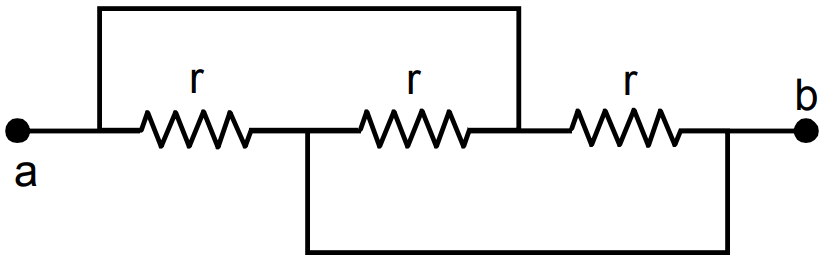
Find the equivalent resistance of the network shown in figure. between the points a and b.
Two successive resonance frequencies in an open organ pipe are 1944Hz and 2592Hz. Find the length of the tube. The speed of sound in air is 324m/s.
Does short-sightedness (myopia) or long-sightedness (hypermetropia) imply necessarily that the eye has partially lost its ability of accommodation? If not, what might cause these defects of vision?
A barometer tube is 80cm long (above the mercury reservoir). It reads 76cm on a particular day. A small amount of water is introduced in the tube and the reading drops to 75.4cm. Find the relative humidity in the space above the mercury column if the saturation vapour pressure at the room temperature is 1.0cm.
In RL and RC series AC circuits the resonance phenomenon isn't possible. Why?
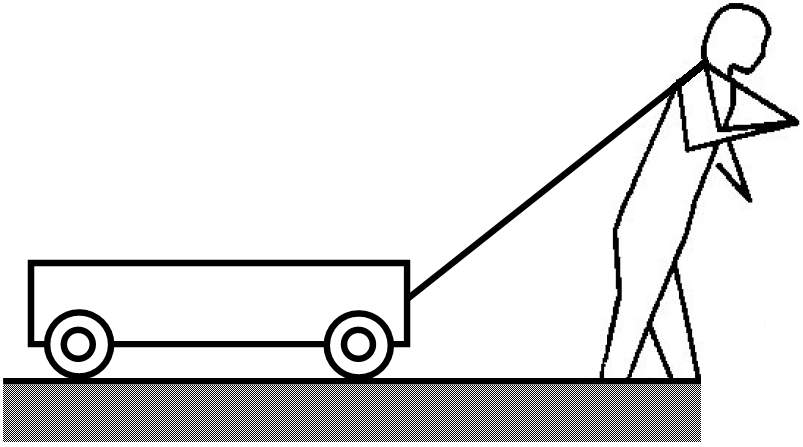
Figure shows a boy pulling a wagon on a road. List as many forces as you can which are relevant with this figure. Find the pairs of forces connected by Newton's third law of motion.
Discuss the results of the Geiger-Marsden $\alpha$-particle scattering experiment with necessary graphs.
A circular coil of N turns and radius R carries a current I. It is unwound and rewound to make another coil of radius R/2, current I remaining the same. Calculate the ratio of the magnetic moments of the new coil and the original coil.
In a series LCR circuit, the voltage across an inductor, a capacitor and a resistor are 30V, 30V and 60V respectively. What is the phase difference between the applied voltage and current in the circuit?
Explain hard ferromagnetic and soft ferromagnetic materials.