MCQ
A continuous and differentiable function $‘ f ‘$ satisfies the condition ,$\int\limits_0^x \, f (t) d t = f^2 (x) - 1$ for all real $‘ x ‘$. Then :
  • A
    $‘ f ‘$ is monotonic increasing $\forall x \in R$
  • B
    $‘ f ‘$ is monotonic decreasing $\forall x \in R$
  • C
    the graph of $y = f (x)$ is a straight line.
  • both $(A)$ and $(C)$

Answer

Correct option: D.
both $(A)$ and $(C)$
d
Differentiating $f (x) = 2 f (x). f ‘ (x) $

$\Rightarrow f ‘ (x) =$ $\frac{1}{2}$ $( f (x)) \ne 0)$
Hence $f (x) =$ $\frac{x}{2}$ $+ c$.

Put $x = 0$ ; $f (0) = c $; but $f^2 (0) = 1$
$\Rightarrow f (0) = ± 1$
Hence $f (x) = \frac{x}{2} ± 1$ 

Need a full question paper?

Generate a complete, print-ready paper with questions like this in minutes — across 16+ boards, with answer keys.

Start Generating Free

Similar questions

The matrix $\begin{bmatrix}0&5&-7\\-5&0&11\\7&-11&0\end{bmatrix}$ is:
  1. A skew-symmetric matrix.
  2. A symmetric matrix.
  3. A diagonal matrix.
  4. An uppertriangular matrix.
The system of equations $kx + 2y\,-z = 1$  ;  $(k\,-\,1)y\,-2z = 2$  ;  $(k + 2)z = 3$ has unique solution, if $k$ is equal to
$\int_{}^{} {\frac{{dx}}{{(1 + {x^2})\sqrt {1 - {x^2}} }} = } $
A and B are two events such that P(A / B) =P(B/A). $\neq 0$ then which of the following is correct-
If $f$ and $g$ are continuous functions on $[0,\,\,a]$ satisfying $f(x) = f(a - x)$ and $g(x) + g(a - x) = 2,$ then $\int_0^a {f(x)g(x)\,dx = } $
If the position vectors of  $ A $ and $B$  be $6i + j - 3k$ and $4i - 3j - 2k,$ then the work done by the force $\vec F = i -3 j + 5k$ in displacing a particle from $A$  to $ B $ is ............ $\mathrm{unit}$
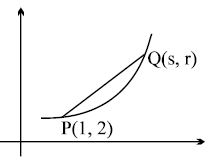
The graph of function $f$ contains the point $P (1, 2)$ and $Q(s, r)$. The equation of the secant line through $P$ and $Q$ is $y = \left( {\frac{{{s^2} + 2s - 3}}{{s - 1}}} \right)$ $x - 1 - s$. The value of $f ‘ (1)$, is
Let $\mathrm{f}(\mathrm{x})$ be a cubic polynomial with $\mathrm{f}(1)=-10$ $\mathrm{f}(-1)=6$, and has a local minima at $\mathrm{x}=1$, and $f^{\prime}(x)$ has a local minima at $x=-1$. Then $f(3)$ is equal to .... .
Let $O$ be the origin and the position vector of $A$ and $B$ be $2 \hat{i}+2 \hat{j}+\hat{k}$ and $2 \hat{i}+4 \hat{j}+4 \hat{k}$ respectively. If the internal bisector of $\angle A O B$ meets the line $A B$ at $\mathrm{C}$, then the length of $\mathrm{OC}$ is
In Graphical solution the redundant constraint is: