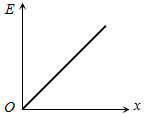
- A

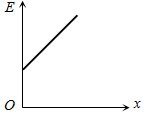
- ✓

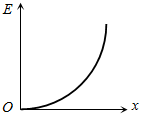
- C

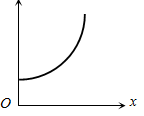
- D


Generate a complete, print-ready paper with questions like this in minutes — across 16+ boards, with answer keys.
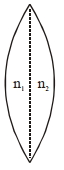
$(1)$ The relation between $\frac{\Delta f}{f}$ and $\frac{\Delta n}{n}$ remains unchanged if both the convex surfaces are replaced by concave surfaces of the same radius of curvature.
$(2)$ $\left|\frac{\Delta f }{ f }\right|<\left|\frac{\Delta n }{ n }\right|$
$(3)$ For $n =1.5, \Delta n =10^{-3}$ and $f =20 cm$, the value of $|\Delta f |$ will be $0.02 cm$ (round off to $2^{\text {nd }}$ decimal place)
$(4)$ If $\frac{\Delta n }{ n }<0$ then $\frac{\Delta f }{ f }>0$

$A.$ The surface energy per nucleon $\left(b_s\right)=a_1 A^{2 / 3}$
$B.$ The Coulomb contribution to the binding energy $b_c=-a_2 \frac{Z(Z-1)}{A^{4 / 3}}$
$C.$ The volume energy $b_v=a_3 A$
$D.$ Decrease in the binding energy is proportional to surface area.
$E.$ While estimating the surface energy, it is assumed that each nucleon interacts with $12$ nucleons, $\left(a_1, a_2\right.$ and $a _3$ are constants)
Choose the most appropriate answer from the options given below: