Question

A device which converts electrical energy into mechanical energy is

(a) Dynamo

(b) generator

(c) Electric motor

(d) Induction coil

Answer

(c) Electric motor

Need a full question paper?

Generate a complete, print-ready paper with questions like this in minutes — across 16+ boards, with answer keys.
Start Generating Free

Similar questions

Visible light passing through a circular hole forms a diffraction disc of radius 0.1mm on a screen. If an X-ray is passed through the same setup, the radius of the diffraction disc will be:
  1. zero
  2. < 0.1mm
  3. 0.1mm
  4. > 0.1m
Suppose potential energy between electron and proton at separation r is given by U = K ln (r), where K is a constant. For such a hypothetical hydrogen atom, the ratio of energy difference between energy levels (n = 1 and n = 2) and (n = 2 and n = 4) is?
An electric bulb is made to work at 12 V dc. When this bulb is joined with an ac source, it gives normal brightness. Peak voltage of ac source is:
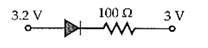
The current in the circuit shown in the figure considering ideal diode is
Image
Assume you are sitting in sun for 2.5 hours. The area of your body exposed normally to sun rays 1.3m2. The intensity of sun rays is $\frac{1.1 \text{Kilowatt}}{\text{m}^2}$ If your body completely absorbs the sun rays then the momentum transferred to your body will be (in Kg - $\frac{\text{m}}{\text{s}}$):

The chemical equivalent of copper and zinc are 32 and 108 respectively. When copper and silver voltameter are connected in series and electric current is passed through for sometimes, 1.6 g of copper is deposited. Then, the mass of silver deposited will be

(a) 3.5 g  

(b) 2.8 g

(c) 5.4 g  

(d) None of these

Which of the following reaction must be initiated by the neutron?

Assertion   : In the given circuit if lamp B or C fuses then light emitted by lamp A decreases.
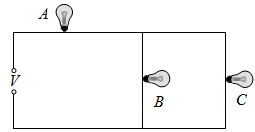
Reason      : Voltage on A decreases.


(a) If both assertion and reason are true and the reason is the correct explanation of the assertion.

(b) If both assertion and reason are true but reason is not the correct explanation of the assertion.

(c) If assertion is true but reason is false.

(d) If the assertion and reason both are false.

A person sitting firmly over a rotating stool has his arms stretched. If he folds his arms, his angular momentum about the axis of rotation:
  1. Increases.
  2. Decreases.
  3. Remains unchanged.
  4. Doubles.
In a cassette player, material used for coating magnetic tapes is: