MCQ
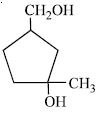
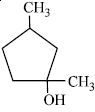
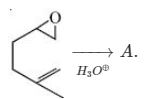
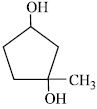
$‘A’$ is
  • A


  • C

  • D

Answer

Correct option: B.

b

Need a full question paper?

Generate a complete, print-ready paper with questions like this in minutes — across 16+ boards, with answer keys.

Start Generating Free

Similar questions

Arrange the following in decreasing order of $BP$

$CH_3CHO$ $( I )$, $CH_3CH_2OH$ $( II )$

$CH_3OCH_3$ $( III )$, $CH_3CH_2CH_3$ $( IV )$

The standard reduction potentials at $298 \mathrm{~K}$ for the following half cells are given below :

$\mathrm{Cr}_2 \mathrm{O}_7{ }^{2-}+14 \mathrm{H}^{+}+6 \mathrm{e}^{-} \rightarrow 2 \mathrm{Cr}^{3+}+7 \mathrm{H}_2 \mathrm{O}, \mathrm{E}^{\circ}=1.33 \mathrm{~V}$

$\mathrm{Fe}^{3+}(\mathrm{aq})+3 \mathrm{e}^{-} \rightarrow \mathrm{Fe}  \mathrm{E}^{\circ}=-0.04 \mathrm{~V}$

$\mathrm{Ni}^{2+}(\mathrm{aq})+2 \mathrm{e}^{-} \rightarrow \mathrm{Ni}  \mathrm{E}^{\circ}=-0.25 \mathrm{~V}$

$\mathrm{Ag}^{+}(\mathrm{aq})+\mathrm{e}^{-} \rightarrow \mathrm{Ag} \mathrm{E}^{\circ}=0.80 \mathrm{~V}$

$\mathrm{Au}^{3+}(\mathrm{aq})+3 \mathrm{e}^{-} \rightarrow \mathrm{Au} \mathrm{E}^{\circ}=1.40 \mathrm{~V}$

Consider the given electrochemical reactions, The number of metal$(s)$ which will be oxidized be $\mathrm{Cr}_2 \mathrm{O}_7{ }^{2-}$, in aqueous solution is. . . . . . 

$C{l_2} + \mathop {NaOH}\limits_{\left( {dil\,and\,coid} \right)} \longrightarrow A + B + {H_2}O$ . The anions of $A$ and $B$ are respectively _____
The oxidation state of $Fe$ in the complex $[Fe{(CO)_5}]$ is
$EAN$ of the central metal in the complexes -$K_2[Ni(CN_4)], [Cu(NH_3)_4]SO_4$ and $K_2[PtCl_6]$ are respectively.
What will be the reduction potential of $Cu$ in aqueous solution with $pH = 12$ ? If $K_{sp}$ of $Cu(OH)_2$ is $1\times10^{-19}$ and $E_{C{u^{ + 2}}/Cu}^o = 0.34\,V$ ............. $\mathrm{V}$
$Zn$ and $Hg$ belong to the same group, they differ in many of their properties. The property that is shared by both is
In the reaction :

$2x + B_2H_6 \longrightarrow [BH_2(x)_2]^+ [BH_4]^-$

the amine '$x$' will not be

Assertion : $CHCl_3$ is stored in dark bottles.
Reason : $CHCl_3$ is oxidised in dark.
The structure of the compound that gives a tribromo derivative on treatment with bromine water is