MCQ
A magnetic field can be produced by:
  • A
    A moving charge.
  • B
    A changing electric field.
  • C
    Neither of them.
  • Both of them.

Answer

Correct option: D.
Both of them.

According to Ampere$-$Maxwell's Law, a magnetic field is produced due to the conduction current in a conductor and the displacement current. The conduction current is actually the motion of the charge. The displacement current is due to the changing electric field. The displacement current is given by,
$\text{i}_\text{d}=\in_0\frac{\text{d}\phi_\text{E}}{\text{dt}}$ $\big(\because\phi_\text{E}$ is the electric flux$\big)$
Thus, the magnetic field is produced by the moving charge as well as the electric field.

Need a full question paper?

Generate a complete, print-ready paper with questions like this in minutes — across 16+ boards, with answer keys.
Start Generating Free

Similar questions

Bonding in a germanium crystal (semi- conductor) is
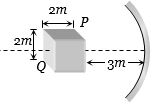
A cube of side $2\, m$ is placed in front of a concave mirror focal length $1\,m$ with its face $P$ at a distance of $3\, m$ and face $Q$ at a distance of $5\, m$ from the mirror. The distance between the images of face $P$ and $Q$ and height of images of $P$ and $Q$ are
When a current of $2\, A$ flows in a battery from negative to positive terminal, the  potential difference across it is $12\, V$. If a current of $3 \,A$ flows in the opposite  direction potential difference across the terminals of the battery is $15\, V$, the $emf$ of the  battery is ................ $\mathrm{V}$
In positive logic, the logic state $1$ corresponds to:
In the following hexagons, made up of two different material $P$ and $Q,$ current enters and leaves from points $X$ and $Y$ respectively. In which case the magnetic field at its centre is not zero.
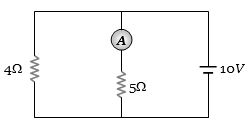
if the internal resistance of the battery is $1\, ohm$, then what is the reading of ammeter
Two metallic charged spheres whose radii are 20 cm and 10 cm respectively, have each 150 micro - coulomb positive charge. The common potential after they are connected by a conducting wire is
Fraunhofer lines are obtained in
A particle which has zero rest mass and non-zero energy and momentum must travel with a speed
$A$ ray incident at an angle $53^o$ on a prism emerges at an angle at $37^o$ as shown. If the angle of incidence is made $50^o$, which of the following is a possible value of the angle of emergence......$^o$