MCQ
$A [M(H_2O)_6]^{2+}$ complex typically absorbs at around $600\, nm$. It is allowed to react with ammonia to form a new complex $[M(NH_3)_6]^{2+}$ that should have absorption at ....... $nm$
- ✓$800$
- B$580$
- C$620$
- D$320 $
Generate a complete, print-ready paper with questions like this in minutes — across 16+ boards, with answer keys.
| $S.NO.$ | $[A]$ $mol.L^{-1}$ | $[B]$ $mol.L^{-1}$ | $Rate$ $mol.L^{-1}\,sec^{-1}$ |
| $I$ | $1 \times 10^{-2}$ | $2 \times 10^{-2}$ | $2 \times 10^{-4}$ |
| $II$ | $2 \times 10^{-2}$ | $2 \times 10^{-2}$ | $4 \times 10^{-4}$ |
| $III$ | $2 \times 10^{-2}$ | $4 \times 10^{-2}$ | $8 \times 10^{-4}$ |
Which of the following are correct statements -
$(a)$ Rate constant of the reaction $10^{-4}$
$(b)$ Rate law of the reaction is $k[A][B]$
$(c)$ Rate of reaction increases four times on doubling the concentration of both the reactant
$\begin{array}{*{20}{c}}
O \\
{||} \\
{C{H_3} - C - C{H_3}}
\end{array}\xrightarrow{{{C_6}{H_5}COOOH}}\begin{array}{*{20}{c}}
{O\,\,\,\,\,\,\,\,\,} \\
{||\,\,\,\,\,\,\,\,\,} \\
{C{H_3} - C - O - C{H_3}}
\end{array}$
The above reaction is known as :
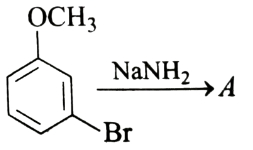
$\xrightarrow{{NaN{H_2}}}\,A$