Question
A parallel-plate capacitor having plate area $400cm^2$ and separation between the plates $1.0mm$ is connected to a power supply of 100V. A dielectric slab of thickness $1.0mm$ and dielectric constant $5.0$ is inserted into the gap:
  1. Find the increase in electrostatic energy.
  2. If the power supply is now disconnected and the dielectric slab is taken out, find the further increase in energy.
  3. Why does the energy increase in inserting the slab as well as in taking it out?
Answer

$A = 400cm^2 = 4 \times 10^{-2}m^2 d = 1cm = 1 \times 10^{-3}m V = 160V t = 0.5 = 5 \times 10^{-4}m k = 5\text{C}=\frac{\in_0\text{A}}{\text{d}-\text{t}+\frac{\text{t}}{\text{k}}}$
$=\frac{8.85\times10^{-12}\times4\times10^{-2}}{10^{-3}-5\times10^{-4}+\frac{5\times10^{-4}}{5}}$
$=\frac{35.4\times10^{-4}}{10^{-3}-0.5}$

Need a full question paper?

Generate a complete, print-ready paper with questions like this in minutes — across 16+ boards, with answer keys.

Start Generating Free

Similar questions

Explain by making a labelled diagram of two dimensional collision or oblique collision.
A vessel filled with water is kept on a weighing pan and the scale adjusted to zero. A block of mass M and density $\rho$ is suspended by a massless spring of spring constant k. This block is submerged inside into the water in the vessel. What is the reading of the scale?
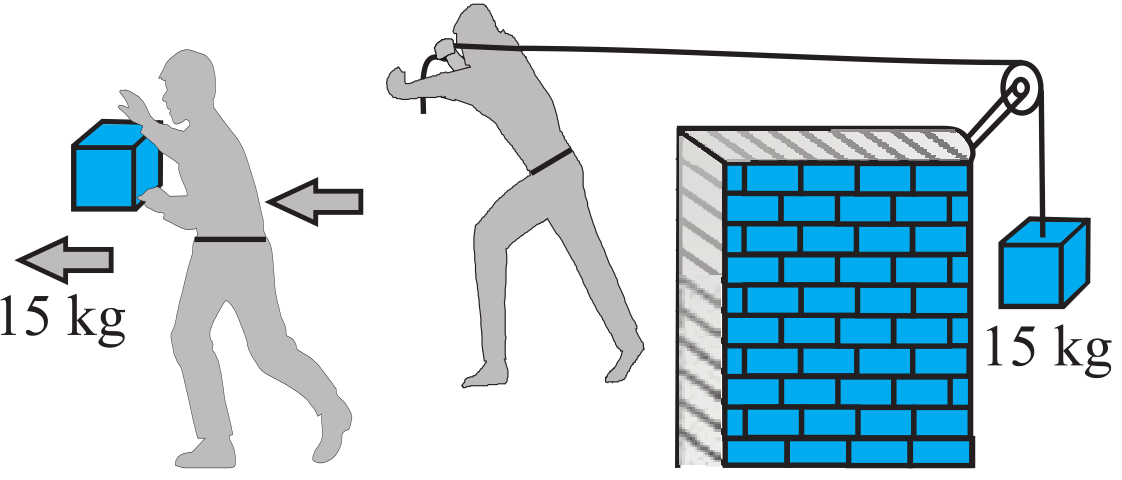
Answer the following: In the man walks $2m$ carrying a mass of $15kg$ on his hands. In he walks the same distance pulling the rope behind him. The rope goes over a pulley, and a mass of $15kg$ hangs at its other end. In which case is the work done greater?
Prove that the root mean square velocity of a molecule is absolute, is directly proportional to the square root of temperature and the mean kinetic energy is directly proportional to absolute temperature.
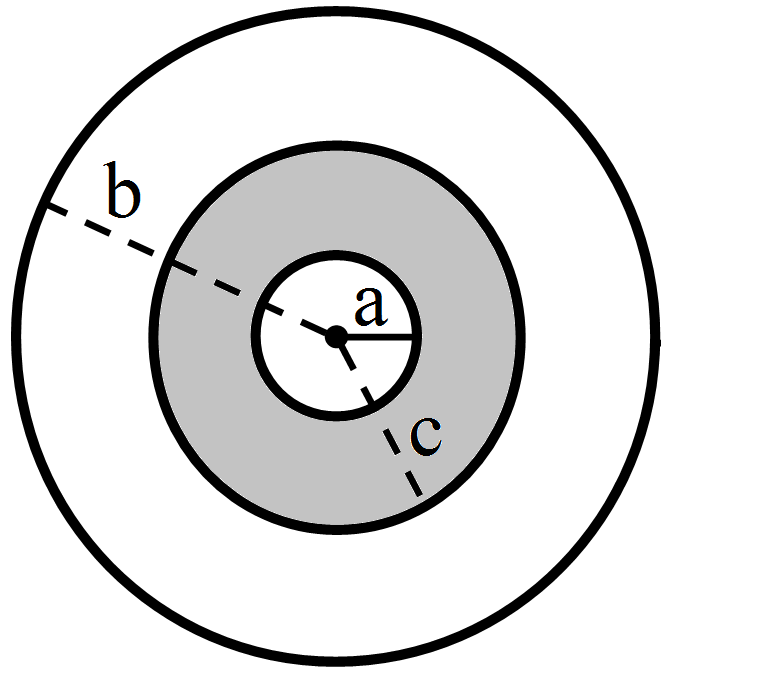
A sphercial capacitor is made of two conducting spherical shells of radii a and b. The space between the shells is filled with a dielectric of dielectric constant K up to a radius c as shown in figure. Calculate the capacitance.
Mathematically describe the motion of a particle along a plane (or along a two-dimensional plane).
Establish the following vector inequalities geometrically or otherwise: $|\text{a}-\text{b}|\le|\text{a}|+|\text{b}|$ When does the equality sign above apply?
An electron and a proton are detected in a cosmic ray experiment, the first with kinetic energy 10 keV , and the second with 100 keV . Which is faster, the electron or the proton? Obtain the ratio of their speeds. (electron mass = $9.11 \times 10^{-31} \mathrm{~kg}$, proton mass $=1.67 \times 10^{-27} \mathrm{~kg}, 1 \mathrm{eV}=1.60 \times 10^{-19} \mathrm{~J}$ ).
We would like to prepare a scale whose length does not change with temperature. It is proposed to prepare a unit scale of this type whose length remains, say $10cm$. We can use a bimetallic strip made of brass and iron each of different length whose length (both components) would change in such a way that difference between their lengths remain constant. If $a_{iron} = 1.2 \times 10^{-5}/ K$ and $a_{brass} = 1.8 \times 10^{-5}/ K$, what should we take as length of each strip?
What is change of state? What are the two special things for this and what are the main activities of change of state?