MCQ
A physical quantity $Q$ is found to depend on quantities $a, b, c$ by the relation $Q=\frac{a^4 b^3}{c^2}$. The percentage error in $a$, $b$ and $c$ are $3 \%, 4 \%$ and $5 \%$ respectively. Then, the percentage error in $\mathrm{Q}$ is :
  • A
     $66 \%$
  • B
     $43 \%$
  •  $34 \%$
  • D
     $14 \%$

Answer

Correct option: C.
 $34 \%$
c
$ \mathrm{Q}=\frac{\mathrm{a}^4 \mathrm{~b}^3}{\mathrm{c}^2} $

$ \frac{\Delta \mathrm{Q}}{\mathrm{Q}}=4 \frac{\Delta \mathrm{a}}{\mathrm{a}}+3 \frac{\Delta \mathrm{b}}{\mathrm{b}}+2 \frac{\Delta \mathrm{c}}{\mathrm{c}} $

$ \frac{\Delta \mathrm{Q}}{\mathrm{Q}} \times 100=4\left(\frac{\Delta \mathrm{a}}{\mathrm{a}} \times 100\right)+3\left(\frac{\Delta \mathrm{b}}{\mathrm{b}} \times 100\right)+2\left(\frac{\Delta \mathrm{c}}{\mathrm{c}} \times 100\right) $

$ \% \text { error in } \mathrm{Q}=4 \times 3 \%+3 \times 4 \%+2 \times 5 \% $

$=12 \%+12 \%+10 \% $

$=34 \%$

Need a full question paper?

Generate a complete, print-ready paper with questions like this in minutes — across 16+ boards, with answer keys.

Start Generating Free

Similar questions

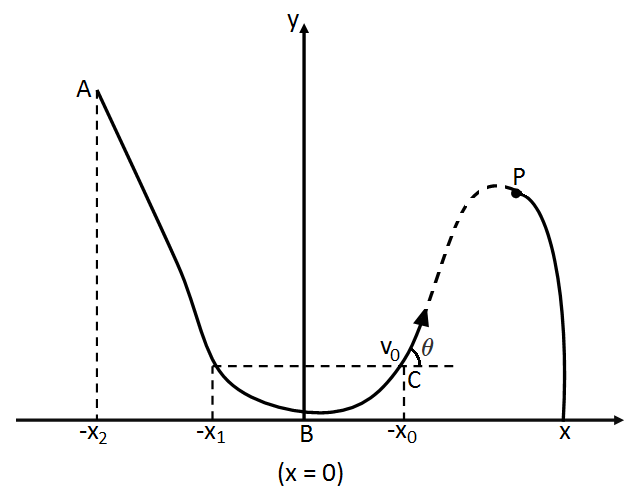
A particle slides down a frictionless parabolic (y = x) track (A – B – C) starting from rest at point A. Point B is at the vertex of parabola and point C is at a height less than that of point A. After C, the particle moves freely in air as a projectile. If the particle reaches highest point at P, then

  1. KE at P = KE at B.
  2. height at P = height at A.
  3. total energy at P = total energy at A.
  4. time of travel from A to B = time of travel from B to P.
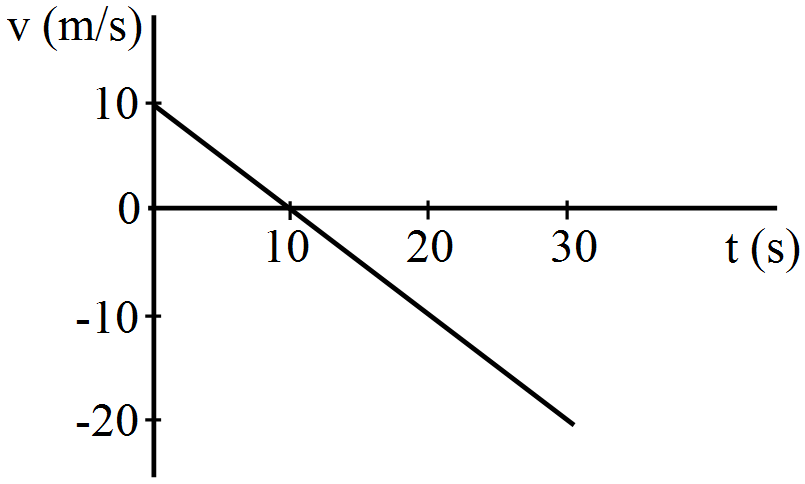
The velocity-time plot for a particle moving on a straight line is shown in the figure:

  1. The particle has a constant acceleration.
  2. The particle has never turned around.
  3. The particle has zero displacement.
  4. The average speed in the interval 0 to 10s is the same as the average speed in the interval 10s to 20s.
Two particles A and B, initially at rest, moves towards each other under a mutual force of attraction. At the instant when the speed of A is u and the speed of B is 2u, the speed of centre of mass is:
Which of the following statements is true for a car moving on the road?
If the volume of a block of metal changes by $0.12 \%$ when it is heated thrugh $20^oC$, the coefficient of linear expansion (in $^oC^{-1}$) of the metal is
A small electric car has a maximum constant acceleration of $1\,m / s ^2$, a maximum constant deceleration of $2\,m / s ^2$ and a maximum speed of $20\,m / s$. The amount of time it would take to drive this car $1\,km$ starting from rest and finishing at rest is $.........\,s$
The pressure and density of a diatomic gas $(\gamma = 7/5)$ change adiabatically from $(P, d)$ to $(P', d')$. If $\frac{{d'}}{d} = 32$, then $\frac{{P'}}{P}$ should be
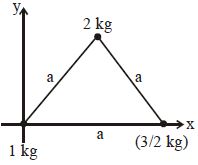
Three particles of masses $1\,kg,\,\frac {3}{2}\,kg$ , and $2\,kg$ are located at the vertices of an equilateral triangle of side $a$ . The $x, y$ coordinates of the centre of mass are
When a $1.0\,kg$ mass hangs attached to a spring of length $50 cm$, the spring stretches by $2 \,cm$. The mass is pulled down until the length of the spring becomes $60\, cm.$ What is the amount of elastic energy stored in the spring in this condition, if $g = 10 m/s^{2}$ ............. $\mathrm{Joule}$
At what angle of elevation, should a projectile be projected with velocity $20 \,ms ^{-1}$, so as to reach a maximum height of $10 \,m$ ?