MCQ
A $PN-$ junction has a thickness of the order of
  • A
    $1\,cm$
  • B
    $1\,mm$
  • ${10^{ - 6}}m$
  • D
    ${10^{ - 12}}cm$

Answer

Correct option: C.
${10^{ - 6}}m$
c
When P-type semiconductor is mixed with $N$ - type semiconductor, $PN$ junction is formed. There is very small region which is in order of micro metre . This region is known as depletion region. so, the thickness of $PN ^{-}$ junction depletion region is in order of $10^{-6} m$.

Need a full question paper?

Generate a complete, print-ready paper with questions like this in minutes — across 16+ boards, with answer keys.
Start Generating Free

Similar questions

A proton and an electron both moving with the same velocity $v$ enter into a region of magnetic field directed perpendicular to the velocity of the particles. They will now move in circular orbits such that
Light of frequency $4 n_0$ is incident on the metal of the threshold frequency $\mathrm{n}_0$. The maximum kinetic energy of the emitted photoelectrons is
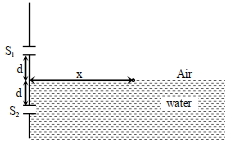
A Young's double slit interference arrangement with slits $S _1$ and $S_2$ is immersed in water (refractive index $=4 / 3$ ) as shown in the figure. The positions of maxima on the surface of water are given by $x^2=p^2 m^2 \lambda^2-d^2$, where $\lambda$ is the wavelength of light in air (refractive index $=1$ ), $2 d$ is the separation between the slits and $m$ is an integer. The value of $p$ is
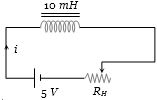
The resistance in the following circuit is increased at a particular instant. At this instant the value of resistance is $10\, \Omega$. The current in the circuit will be now
An $LC$ circuit consists of a capacitor and a coil with a large number of turns. Suppose all the linear dimensions of all elements of the circuit are increased by a factor of $2$ while keeping the number of turns on the coil constant. How much does the resonant frequency of the circuit change?
When a test charge is brought from infinity to near the dipole along the neutral line of an electric dipole, then the work done will be:
Alternating current is produced in:
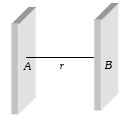
There are two equipotential surface as shown in figure. The distance between them is $r$. The charge of $-q\,$ coulomb is taken from the surface $A$ to $B$, the resultant work done will be
Two wires of same material have length $L$ and $2L $ and cross-sectional areas $4A$ and $A$ respectively. The ratio of their specific resistance would be
In Young's experiment, the distance between the slits is reduced to half and the distance between the slit and screen is doubled, then the fringe width