MCQ
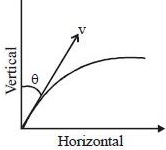
A projectile thrown with velocity $v$ making angle $\theta$ with vertical gains maximum height $H$ in the time for which the projectile remains in air, the time period is
  • A
    $\sqrt {H\,\cos \,\theta /g} $
  • B
    $\sqrt {2H\,\cos \,\theta /g} $
  • C
    $\sqrt {4H/g} $
  • D
    $\sqrt {8H/g} $

Answer

Max. height $=H=\frac{v^2 \sin ^2(90-\theta)}{2 g}......(i)$
Time of flight,$T=\frac{2 v \sin (90-\theta)}{g}.....(ii)$
From $(i), \frac{v \cos \theta}{g}=\sqrt{\frac{2 H}{g}}$ From$(ii),$
$T=2 \sqrt{\frac{2 H}{g}}=\sqrt{\frac{8 H}{g}}.$

Need a full question paper?

Generate a complete, print-ready paper with questions like this in minutes — across 16+ boards, with answer keys.

Start Generating Free

Similar questions

The back $e.m.f$. induced in a coil, when current changes from $1$ ampere to zero in one milli second, is $4$ volts, the self inductance of the coil is
An electron of charge $e$ moves in a circular orbitof radius $r$ around the nucleus at a frequency $v$. The magnetic moment associated with the orbital motion of the electron is
A liquid drop of mass $m$ and radius $r$ is falling from great height. Its velocity is proportional to ............
If $\overrightarrow {\rm A} = 2\hat i + 3\hat j - \hat k$ and $\overrightarrow B = - \hat i + 3\hat j + 4\hat k$ then projection of $\overrightarrow A $ on $\overrightarrow B $ will be
A body of mass $5\, kg$ moving with a velocity $10\,m/s$ collides with another body of the mass $20 \,kg$ at, rest and comes to rest. The velocity of the second body due to collision is ......... $m/s$
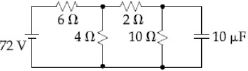
Determine the charge on the capacitor in the following circuit ................ $\mu  C$
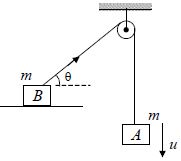
Two equal masses $A$ and $B$ are arranged as shown in the figure. Pulley and string are ideal and there is no friction. Block $A$ has a speed $u$ in the downward direction. The speed of the block $B$ is :-
The width of the $nth$ $HPZ$  will be
A circular ring carries a uniformly distributed positive charge. The electric field $(E) $ and potential $ (V) $ varies with distance $(r)$ from the centre of the ring along its axis as
In a Young's double slit experiment, the intensities at two points, for the path difference $\frac{\lambda}{4}$ and $\frac{\lambda}{3}$ ( $\lambda$ being the wavelength of light used) are $I_1$ and $I_2$ respectively. If $I_0$ denotes the intensity produced by each one of the individual slits, then $\frac{ I _1+ I _2}{ I _0}=..............$