Question
A radioactive material undergoes decay by ejecting electrons. The electron ejected in this process is:
Answer

  1. The electron from the decay of a neutron.

Need a full question paper?

Generate a complete, print-ready paper with questions like this in minutes — across 16+ boards, with answer keys.

Start Generating Free

Similar questions

An experiment to verify ohm's law, a conductor of resistance R is taken. During the experiment, temperature of the conductor increases with the flow of current. Resistance of the conductor will:
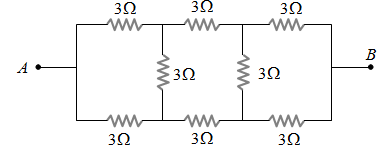
Calculate the equivalent resistance between $A$ and $B$
A freshly prepared radioactive source of half$-$life $2h$ emits radiation of intensity which is $64$ times the permissible safe level. The minimum time after which it would be possible to work safely with this source is:
Light takes $8$ min $20 \sec$ to reach from sun on the earth. If the whole atmosphere is filled with water, the light will take the time $\left(\mathrm{a}^{\mu_\omega}=4 / 3\right)$
According to Coulomb’s law, the coulomb force measured between two point charges is inversely proportional to:
For harder X-rays(a) The wavelength is higher(b) The intensity is higher(c) The frequency is higher(d) The photon energy is lower
   
   
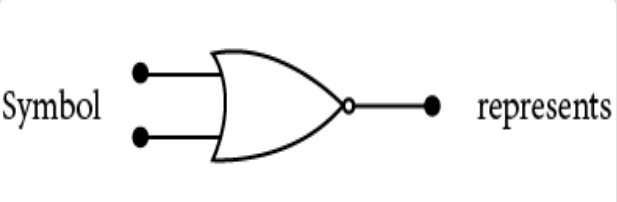
Identify the logic gate in figure.
"The work per unit of charge required to move a charge from a reference point to a specified point, measured in joules per coulomb or volts. The static electric field is the negative of the gradient of the electric potential." comments are given below, select the correct one:
The subatomic particle that is emitted from a metal surface, when it is heated is a/an _________:
A light source approaches the observer with velocity 0.8 c. The doppler shift for the light of wavelength  5500 Å is(a) 4400 Å(b) 1833 Å(c) 3167 Å(d) 7333 Å