MCQ
A reducing agent is a substance which can
  • A
    Accept electron
  • Donate electrons
  • C
    Accept protons
  • D
    Donate protons

Answer

Correct option: B.
Donate electrons
(b) A substance which is capable of reducing other substances and is capable of donating electrons during reduction is called a reducing agent or reductant.

Need a full question paper?

Generate a complete, print-ready paper with questions like this in minutes — across 16+ boards, with answer keys.
Start Generating Free

Similar questions

A compound of a metal ion $M^{x+}$ $(Z = 24)$ has a spin only magnetic moment of $\sqrt {15}$ Bohr Magnetons. The number of unpaired electrons in the compound are
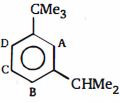
Nitration takes place at the which position of the given compound ?
Which of the following is the correct electronic formula of chlorine molecule
Which of the following compound shows geometrical isomerism
Given that
$2C(s) + 2O_2(g) \to 2CO_2(g) ; \Delta H = -787\, kJ$
$H_2(g) + \frac{1}{2} O_2(g) \to H_2O(l) ; \Delta H = -286 \,kJ$
$C_2H_2(g) + 2 \frac{1}{2} O_2(g) \to 2CO_2(g) + H_2O(l)$ ;
$\Delta H = -1301\, kJ$
Heat formation of acetylene is .....$kJ$
Match List$-I$ with List$-II$

List$-I$ Name of oxo acid List$-II$ Oxidation state of $P$
$(a)$ Hypo phosphorous acid $(i) +5$
$(b)$ Orthophosphoric acid $(ii)+4$
$(c)$ Hypo phosphoric acid $(iii) +3$
$(d)$ Orth phosphorous acid $(iv)+2$
  $(v)+1$

Choose the correct answer from the options given below

The correct order for acid strength of compounds $CH \equiv CH,\,C{H_3} - C \equiv CH,\,C{H_2} = C{H_2}$ is as follows
The incorrect postulates of the Dalton's atomic theory are:
(A) Atoms of different elements differ in mass.
(B) Matter consists of divisible atoms.
(C) Compounds are formed when atoms of different element combine in a fixed ratio.
(D) All the atoms of given element have different properties including mass.
(E) Chemical reactions involve reorganisation of atoms. 
Which of the following compound does not show geometrical isomerism
On boiling an aqueous solution of $KCl{O_3}$ with iodine, the following product is obtained