MCQ
A solid metallic cube having total surface area $24\;m ^{2}$ is uniformly heated. If its temperature is increased by $10\,^{\circ} C$, calculate the increase in volume of the cube $\left(\right.$ Given $\left.: \alpha=5.0 \times 10^{-4}{ }^{\circ} C ^{-1}\right)$
  • A
    $2.4 \times 10^{6} cm ^{3}$
  • $1.2 \times 10^{5} cm ^{3}$
  • C
    $6.0 \times 10^{4} cm ^{3}$
  • D
    $4.8 \times 10^{5} cm ^{3}$

Answer

Correct option: B.
$1.2 \times 10^{5} cm ^{3}$
b
Increase in volume $\Delta V =\gamma V _{0} \Delta T$

$\gamma=3 \alpha$

So $\Delta V =(3 \alpha) V _{0} \Delta T$

Total surface area $=6 a ^{2}$, where $a$ is side length $24=6 a ^{2} \quad a =2 m$

$Volume \,V _{0}=(2)^{3}=8 m ^{3}$

$\Delta V =\left(3 \times 5 \times 10^{-4}\right)(8) \times 10$

$=1.2 \times 10^{5} cm ^{3}$

Need a full question paper?

Generate a complete, print-ready paper with questions like this in minutes — across 16+ boards, with answer keys.

Start Generating Free

Similar questions

A current $I$ flows in an infinitely long wire with cross-section in the form of a semicircular ring of radius $R$. The magnitude of the magnetic induction along its axis is
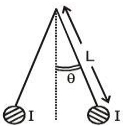
Two long current carrying thin wires, both with current $I$, are held by insulating threads oflength $L$ and are in equilibrium as shown in the figure, with threads making an angle '$\theta$' with the vertical. If wires have mass $\lambda$ per unit length then the value of $l$ is 
($g =$ gravitational acceleration)
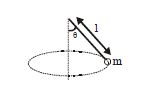
A conical pendulum is moving in a circle with angular velocity $\omega $ as shown. If tension in the string is $T$ , which of following equation are correct?
An electron is travelling along the $x$-direction. It encounters a magnetic field in the $y$-direction. Its subsequent motion will be
Gauss’s law is true only if force due to a charge varies as
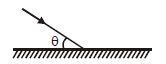
Find the angle of deviation (given diagram)
An ant is moving on a plane horizontal surface. The number of degrees of freedom of the ant will be .........
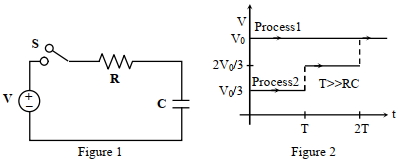
Consider a simple $RC$ circuit as shown in Figure $1$.

Process $1$: In the circuit the switch $S$ is closed at $t=0$ and the capacitor is fully charged to voltage $V_0$ (i.e. charging continues for time $T \gg R C$ ). In the process some dissipation ( $E_D$ ) occurs across the resistance $R$. The amount of energy finally stored in the fully charged capacitor is $EC$.

Process $2$: In a different process the voltage is first set to $\frac{V_0}{3}$ and maintained for a charging time $T \gg R C$. Then the voltage is raised to $\frac{2 \mathrm{~V}_0}{3}$ without discharging the capacitor and again maintained for time $\mathrm{T} \gg \mathrm{RC}$. The process is repeated one more time by raising the voltage to $V_0$ and the capacitor is charged to the same final

take $\mathrm{V}_0$ as voltage

These two processes are depicted in Figure $2$.

 ($1$) In Process $1$, the energy stored in the capacitor $E_C$ and heat dissipated across resistance $E_D$ are released by:

$[A]$ $E_C=E_D$ $[B]$ $E_C=E_D \ln 2$ $[C]$ $\mathrm{E}_{\mathrm{C}}=\frac{1}{2} \mathrm{E}_{\mathrm{D}}$ $[D]$ $E_C=2 E_D$

 ($2$) In Process $2$, total energy dissipated across the resistance $E_D$ is:

$[A]$ $\mathrm{E}_{\mathrm{D}}=\frac{1}{2} \mathrm{CV}_0^2$     $[B]$ $\mathrm{E}_{\mathrm{D}}=3\left(\frac{1}{2} \mathrm{CV}_0^2\right)$    $[C]$ $\mathrm{E}_{\mathrm{D}}=\frac{1}{3}\left(\frac{1}{2} \mathrm{CV}_0^2\right)$   $[D]$ $\mathrm{E}_{\mathrm{D}}=3 \mathrm{CV}_0^2$

Given the answer quetion  ($1$) and  ($2$)
A tiny $0.50\, gm$ ball carries a charge of magnitude $10\, \mu C$. It is suspended by a thread in a downward electric field of intensity $300\, N/C$. If the charge on the ball is positive, then the tension in the string is
What will be the ratio of temperatures of sun and moon if the wavelengths of their maximum emission radiations rates are $140 Å$ and $4200 Å$ respectively