MCQ
A source of sound gives five beats per second when sounded with another source of frequency $100\,{s^{ - 1}}$. The second harmonic of the source together with a source of frequency $205\,{s^{ - 1}}$ gives five beats per second. What is the frequency of the source .... ${s^{ - 1}}$
  • $105$
  • B
    $205$
  • C
    $95$
  • D
    $100$

Answer

Correct option: A.
$105$
a
(a) Frequency of the source $ = 100 \pm 5 = 105 Hz\,$ or $ \,95 Hz.$ 

Second harmonic of the source $= 210 Hz$ or $190 Hz.$

As the second harmonic gives $5$ beats/sec with sound of frequency $205 Hz,$

the second harmonic should be $210 Hz.$

==> Frequency of the source $= 105 Hz.$

Need a full question paper?

Generate a complete, print-ready paper with questions like this in minutes — across 16+ boards, with answer keys.

Start Generating Free

Similar questions

A body moves with velocity $v,\,\,2v$ and $3v$  in the first, second and third, one third distance of path travelled. Its average speed is
$Assertion$: A rigid disc rolls without slipping on a fixed rough horizontal surface with uniform angular velocity. Then the acceleration of lowest point on the disc is zero.
$Reason$ : For a rigid disc rolling without slipping on a fixed rough horizontal surface, the velocity of the lowest point on the disc is always zero
A capillary tube of radius $0.2\,cm$ is dipped vertically in a beaker containing liquid. If the liquid rises to a height of $5\,cm$ for which the angle of contact is $60^o$ , then surface tension of the liquid is ...... $dynes/cm$ $(d = 1\,gm/cm^3)$
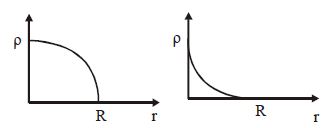
Two planets $A$ and $B$ have same mass and radii $(R)$ . The variation of density of the planets with distance from centre is shown in the following diagrams. The ratio of acceleration due to gravity at the surface of the planets $A$ and $B$ will be
The ratio of escape velocity of a planet to the escape velocity of earth will be:Given : Mass of the planet is $16$ times mass of earth and radius of the planet is $4$ times the radius of earth.
Electron volt is a unit of
A particle of mass $m$ collides with a heavy mass (at rest) elastically and after collision returns with $4/9$ of it's initial kinetic energy. The mass of heavy object is ............... $\mathrm{m}$
In an experiment to find $emf$ of a cell using potentiometer, the length of null point for a cell of emf $1.5\,V$ is found to be $60\,cm$. If this cell is replaced by another cell of $emf\; E$. the length-of null point increases by $40\,cm$. The value of $E$ is $\frac{x}{10} V$. The value of $x$ is $............$
If in a plano-convex lens, the radius of curvature of the convex surface is $10 cm$ and the focal length of the lens is $30 cm,$ then the refractive index of the material of lens will be
A uniform cylindrical rod of length $L$ and radius $r$, is made from a material whose Young's modulus of Elasticity equals $Y$. When this rod is heated by temperature $T$ and simultaneously subjected to a net longitudinal compressional force $F$, its length remains unchanged. The coefficient of volume expansion, of the material of the rod, is (nearly) equals to