MCQ
Acetic acid reacts with $PC{l_5}$to form
- ✓$C{H_3}COCl$
- B$CHC{l_2}COOH$
- C$C{H_2}ClCOOH$
- D$C{H_3}COOCl$
$\mathop {C{H_3}COOH}\limits_{Aceticacid} + \mathop {PC{l_5}}\limits_{\begin{subarray}{l}
Phosphorus \\
pentachloride
\end{subarray}} \to \mathop {C{H_3}COCl}\limits_{\begin{subarray}{l}
Acetyl \\
Chtoride
\end{subarray} } + \mathop {HCl}\limits_{\begin{subarray}{l}
Hydro - Chtortic \\
acid
\end{subarray}} +\mathop {POC{l_3}}\limits_{\begin{subarray}{l}
Phosphoryl \\
chtoride
\end{subarray} }$
Generate a complete, print-ready paper with questions like this in minutes — across 16+ boards, with answer keys.
$(I)$ $ZnCl_2$ is ionic whereas $CdCl_2$ and $HgCl_2$ are covalent
$(II)$ $Zn$ and $Cd$ dissolves in dilute acid $(HCl)$ liberating $H_2$ but $Hg$ can not
$(III)$ $Zn$ and $Cd$ forming with ppt. of $Zn(OH)_2$ and $Cd(OH)_2$ but $Hg$ forms coloured ppt. of
$(IV)$ all from $A_2^{2+}$ type ion
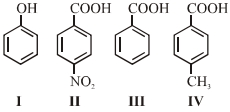
Major Product will be :-