Question
$\mathrm{AlCl}_3$ exist a as dimer while $\mathrm{BCl}_3$ exist as monomer, why?

Answer

'Al' has d-orbital which can accept a lone pair from ' Cl ' forming coordinate bond, $\mathrm{AlCl}_3$ exist as dimer.
In $\mathrm{BCl}_3$, 'Cl' donates a pair of electron to vacant p -orbital of ' B ' forming $\mathrm{p} \pi-\mathrm{p} \pi$ bond making it stable. It exist as $\mathrm{BCl}_3$

Need a full question paper?

Generate a complete, print-ready paper with questions like this in minutes — across 16+ boards, with answer keys.
Start Generating Free

Similar questions

Calculate the number of moles of NaOH in $27 \mathrm{~cm}^3$ of 0.15M NaOH solution.
Give suitable reasons for the following:
i. $\left[\mathrm{SiF}_6\right]^{2-}$ is known whereas $\left[\mathrm{SiCl}_6\right]^{2-}$ not.
ii. Diamond is covalent, yet it has high melting point.
Name the compound in which :
(i) Oxidation number of oxygen is +2 .
(ii) Oxidation number of oxygen is +1 .
(iii) Oxidation number of chlorine is +1 .
How is the term material different from matter?
What are primary and secondary pollutants of air?
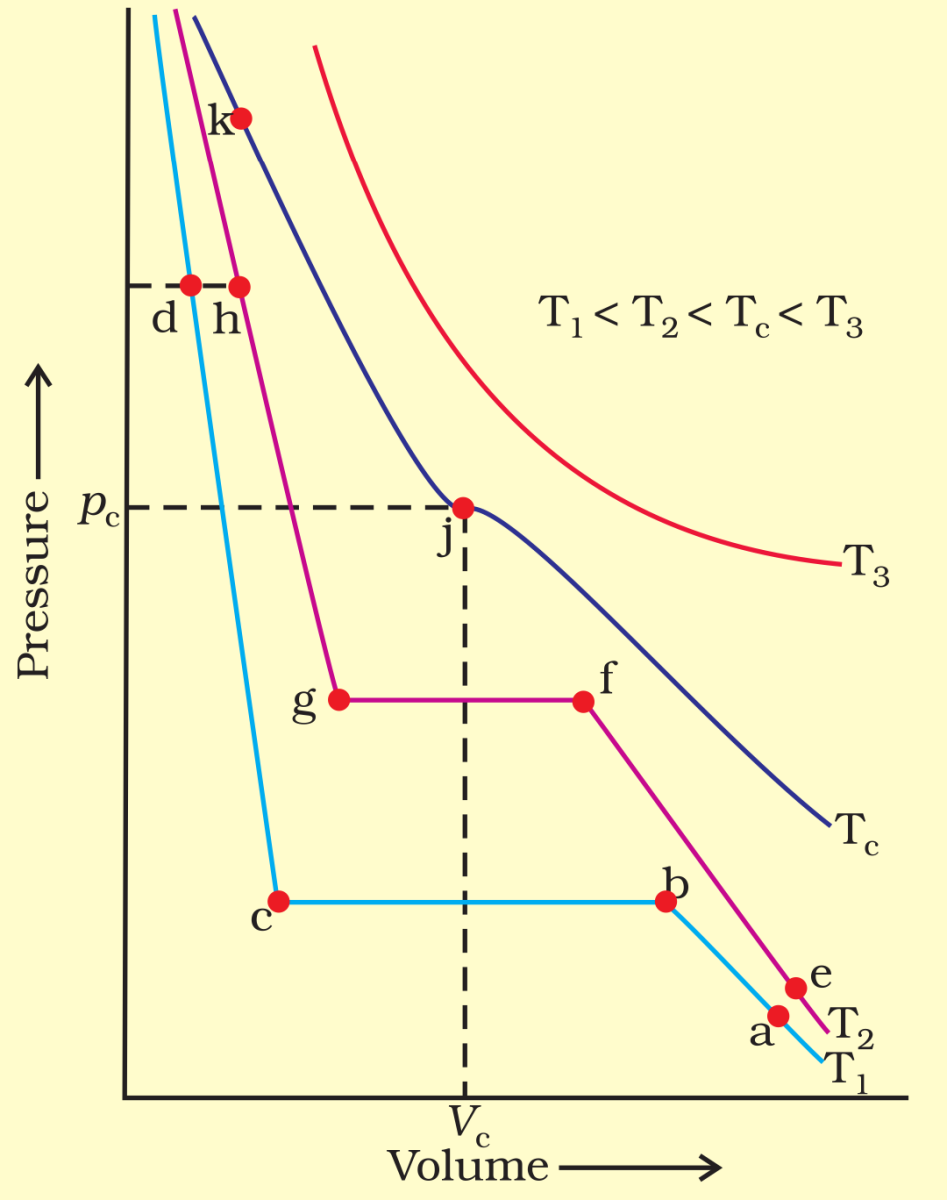
Isotherms of carbon dioxide at various temperatures are represented in Fig. Answer the following questions based on this figure.

a. In which state will $\mathrm{CO}_2$ exist between the points $a$ and $b$ at temperature $\mathrm{T}_1$ ?
b. At what point will $\mathrm{CO}_2$ start liquefying when temperature is $\mathrm{T}_1$ ?
c. At what point will $\mathrm{CO}_2$ be completely liquefied when temperature is $\mathrm{T}_2$.
d. Will condensation take place when the temperature is $T_3$ ?
e. What portion of the isotherm at $\mathrm{T}_1$ represent liquid and gaseous $\mathrm{CO}_2$ at equilibrium?
Identify oxidant and reductant in the reaction:
$\text{I}_2\text{(aq)}+2\text{S}_2\text{O}_3^{2-}\xrightarrow{ \ \ \ \ \ }2\text{I}^-+\text{S}_4\text{O}_6^{2-}$
Nickel atom can lose two electrons to form $\mathrm{Ni}^{2+}$ ion. The atomic number of nickel is 28. From which orbital will nickel lose two electrons.
Represent a galvanic cell in electrode and ions contain Cu electrode dipped in molar solution of copper sulphate and silver electrode dipped in molar solution of silver nitrate.Given
$\text{E}^\circ_\frac{\text{Cu}^{2+}}{\text{Cu}\text{(s)}}=0.34\text{V}$
$\text{E}^\circ_\frac{\text{Ag}^+}{\text{Ag}\text{(s)}}=0.80\text{V}$
Like CO, why its analog of SiO is not stable?