MCQ
Alpha-particle that come closer to nuclei:
- ✓Are deflected more
- BAre deflected less
- CMake more collisions
- DNone
Generate a complete, print-ready paper with questions like this in minutes — across 16+ boards, with answer keys.
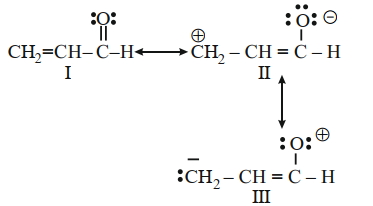
$(I)$ $\begin{array}{*{20}{c}}
{\,\,\,\,\,\,\,\,\,\,\,\,\,\,\,\,\,\,\,\,\,\,\,\,O} \\
{\,\,\,\,\,\,\,\,\,\,\,\,\,\,\,\,\,\,\,\,\,\,\,\,||} \\
{C{H_3} - C{H_2} - O - S - C{F_3}} \\
{\,\,\,\,\,\,\,\,\,\,\,\,\,\,\,\,\,\,\,\,\,\,\,||} \\
{\,\,\,\,\,\,\,\,\,\,\,\,\,\,\,\,\,\,\,\,\,\,\,\,O}
\end{array}$
$(II)$ $CH_3-CH_2-O-TsCl$
$(III)$ $\begin{array}{*{20}{c}}
{C{H_3} - CH - C{H_3}} \\
{|\,\,\,\,} \\
{OH\,}
\end{array}$
$(IV)$ $\begin{array}{*{20}{c}}
{C{H_3} - CH - OH} \\
| \\
{{C_6}{H_5}}
\end{array}$
Assertion $(A)$ : The first ionization enthalpy of $3 d$ series elements is more than that of group $2$ metals
Reason $(R)$ : In $3d$ series of elements successive filling of d-orbitals takes place.
In the light of the above statements, choose the correct answer from the options given below :