MCQ
Aluminium $(III)$ chloride forms a dimer because
  • Higher coordination number can be achieved by aluminium
  • B
    Aluminium has high ionization energy
  • C
    Aluminium belongs to $III$ group
  • D
    It cannot form a trimer

Answer

Correct option: A.
Higher coordination number can be achieved by aluminium
a
$AlCl _3$ can form dimer and exists as $Al _2 Cl _6$, aluminium has vacant $d$-orbitals which can accommodate electron from chlorine atom. $AlCl _3$ is an electron deficient compound in $Al$ (octet incomplete) thus behaves as Lewis acid and $Al$ completes it by taking electron pair from $Cl$-atom as shown in figure.

Need a full question paper?

Generate a complete, print-ready paper with questions like this in minutes — across 16+ boards, with answer keys.
Start Generating Free

Similar questions

$pH$ of blood is maintained constant by mechanism of
Give the correct order of electrical conductivity of aqueous solution of following complexes 
$(A)\, [Pt(NH_3)_6]Cl_4 \,\,\,\,\,\,\,\,\,\,\, (B)\, [Cr(NH_3)_6]Cl_3$
$(C)\, [Co(NH_3)_4Cl_2]\, Cl \,\,\,\,\,(D)\, K_2[PtCl_6]$
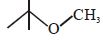
(image) is prepared best by the reaction
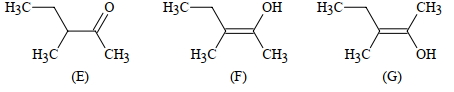
The correct statement $(s)$ concerning the structures $E, F$ and $G$ is (are) $Image$

$(A)$ $E, F$ and $\mathrm{G}$ are resonance structures

$(B)$ $E, F$ and $E, G$ are tautomers

$(C)$ $\mathrm{F}$ and $\mathrm{G}$ are geometrical isomers

$(D)$ $\mathrm{F}$ and $\mathrm{G}$ are diasteromers
The de-Broglie equation applies
Products of the following reaction   $C{H_3}C \equiv \,C\,C{H_2}C{H_3}\mathop {\xrightarrow[{(2)\;Hydrolysis}]{}}\limits^{(1)\;\;{O_3}} $   ....... are
In sets $A - D$, only one of the set is incorrect regarding basic strength. Select it
When primary amines are treated with $HCl$, the product obtained is
(image) $\xrightarrow{{\begin{array}{*{20}{c}}
  {AlC{l_3} + C{H_3} - C - Cl} \\ 
  {\,\,\,\,\,\,\,\,\,\,\,\,\,\,\,\,\,\,\,\,\,\,||\,\,\,} \\ 
  {\,\,\,\,\,\,\,\,\,\,\,\,\,\,\,\,\,\,\,\,\,\,O\,\,\,} 
\end{array}}}$ major product
 $\begin{array}{*{20}{c}}
  {C{H_3} - CH - C{H_2} - C{H_3}\xrightarrow[\Delta ]{{KOH}}product} \\ 
  {|\,\,\,\,\,\,\,\,\,\,\,\,\,\,\,\,\,\,\,\,\,\,\,\,\,\,\,\,\,\,\,\,\,\,\,\,\,\,\,\,\,\,\,\,\,\,\,\,\,\,\,\,\,\,\,\,\,\,\,\,} \\ 
  {Cl\,\,\,\,\,\,\,\,\,\,\,\,\,\,\,\,\,\,\,\,\,\,\,\,\,\,\,\,\,\,\,\,\,\,\,\,\,\,\,\,\,\,\,\,\,\,\,\,\,\,\,\,\,\,\,\,\,\,\,} 
\end{array}$

Possible number of elimination products (alkene) of the given reaction is?