Question
Amino acids are acidic, basic and neutral. Explain these with examples.

Answer

Get the step-by-step solution for this question inside the Vidyadip app.

Get the answer in the app

Need a full question paper?

Generate a complete, print-ready paper with questions like this in minutes — across 16+ boards, with answer keys.
Start Generating Free

Similar questions

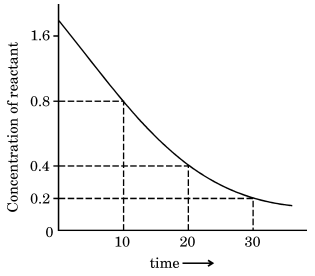
Analyse the given graph, drawn between concentration of reactant vs. time.
Image
(a) Predict the order of reaction.
(b) Theoretically, can the concentration of the reactant reduce to zero after infinite time? Explain.
Explain Crystal field splitting theory
Silver is electrodeposited on a metallic vessel of total surface area 500cm2 by passing a current of 0.5 amp for two hours. Calculate the thickness of silver deposited.
[Given: Density of silver = 10.5g cm-3, Atomic mass of silver = 108 amu, F = 96,500 C mol-1]
Answer the following:
(a) Give two examples of non-chemical process which obeys the first order kinetics.
(b) The following results have been obtained during the kinetic studies for the reaction:
P+2Q → R + 2S
Exp.Initial P(mol/L)Initial Q (mol/L)Init. Rate of Formation of R(M min-1)
10.100.103.0 x 10-4
20.300.309.0 x 10-4
30.100.303.0 x 10-4
40.100.406.0 x 10-4

Determine the rate law expression for the reaction.
Describe the basic strength of aryl amine compounds relative to ammonia.
Define electrode and electrode potential.
Arrange the following compound in increasing order of their reactivity in nucleophilic addition reaction.
Ethanal, Propanal, Propanone, Butanone.
When MnO2 is fused with KOH in the presence of KNO3 as an oxidizing agent, it gives a dark green compound (A). Compound (A) disproportionates in acidic solution to give purple compound (B). An alkaline solution of compound (B) oxidises KI to compound (C) whereas an acidified solution of compound (B) oxidises KI to (D). Identify (A), (B), (C), and (D).
Explain how rusting of iron is envisaged as setting up of an electrochemical cell.
Define the following term (1) Coordination sphere (2) Oxidation number of central atom