MCQ
Ammonia is dried over
- ✓Quick lime
- BSlaked lime
- CAnhy. $CaC{l_2}$
- DNone of these
$Ca ( OH )_2( s )+2 NH _4 Cl ( s ) \rightarrow CaCl _2( s )+2 H _2 O ( l )+2 NH _3( g )$
Concentrated sulphuric acid conc. $H _2 SO _4$ and anhydrous calcium chloride $CaCl _2$ are not used to dry ammonia because they react with it. The gas is passed through fresh quicklime (solid calcium oxide lumps) to effectively dry it. Ammonia is collected by upward delivery as it is lighter than air.
Generate a complete, print-ready paper with questions like this in minutes — across 16+ boards, with answer keys.
$\mathrm{A}+\mathrm{B} \rightarrow \mathrm{C}$ (Reaction 1$)$
$\mathrm{P} \rightarrow \mathrm{Q}$ (Reaction $2$)
The ratio of the half life of Reaction $1$ : Reaction $2$ is $5: 2$. If $t_1$ and $t_2$ represent the time taken to complete $2 / 3^{\text {dd }}$ and $4 / 5^{\text {dd }}$ of Reaction $1$ and
Reaction $2$, respectively, then the value of the ratio $\mathrm{t}_1: \mathrm{t}_2$ is . . . .$\times 10^{-1}$ (nearest integer).
[Given: $\log _{10}(3)=0.477$ and $\log _{10}(5)=0.699$ ]
Statement $(I)$ : $p-$nitrophenol is more acidic than $m-$nitrophenol and $o-$nitrophenol.
Statement $(II)$ : Ethanol will give immediate turbidity with Lucas reagent.
In the light of the above statements, choose the correct answer from the options given below :
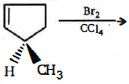
$(A)$ Kinetic energy of electron is $\propto \frac{ Z ^{2}}{ n ^{2}}$.
$(B)$ The product of velocity (v) of electron and principal quantum number (n), 'vn' $\propto Z ^{2}$.
$(C)$ Frequency of revolution of electron in an orbit is $\propto \frac{ Z ^{3}}{ n ^{3}}$.
$(D)$ Coulombic force of attraction on the electron is $\propto \frac{ Z ^{3}}{ n ^{4}}$.
Choose the most appropriate answer from the options given below :