MCQ
Among $Ni(CO)_4,\, Ni(CN)_4^{2-}$ and $[Ni(Cl)_4]^{2-}$
  • A
    $Ni(CO)_4$ and $NiCl_4^{2-}$ are diamagnetic and $Ni(CN)_4^{2-}$ is paramagnetic
  • B
    $NiCl_4^{2-}$ and $Ni(CN)_4^{2-}$ are diamagnetic and $Ni(CO)_4$ is paramagnetic
  • $Ni(CO)_4$ and $Ni(CN)_4^{2-}$ are diamagnetic and $NiCl_4^{2-}$ is paramagnetic
  • D
    $Ni(CO_4)$ is diamagnetic and $NiCl_4^{2-}$ and $Ni(CN)_4^{2-}$ are paramagnetic
Answer

Correct option: C.
$Ni(CO)_4$ and $Ni(CN)_4^{2-}$ are diamagnetic and $NiCl_4^{2-}$ is paramagnetic
c
$Ni(CO)_4$ and $[Ni(CN)_4]^{2-}$ are diamagnetic $[NiCl_4]^{2-}$ are paramagnetic

Need a full question paper?

Generate a complete, print-ready paper with questions like this in minutes — across 16+ boards, with answer keys.

Start Generating Free

Similar questions

In which of the following molecule is the covalent bond most polar
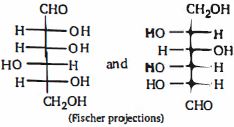
What is the relationship between the molecules in the following pairs ?
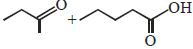
Alkene $(X)$ $\xrightarrow[\Delta ]{{KMn{O_4}}}$ (figure) + (figure) $X$ is
Thiophene and benzene are separated by
The element having the highest first ionization enthalpy is
Which of the following is the energy of a possible excited state of hydrogen ? ............ $\mathrm{eV}$
A current of $10.0\, A$ flows for $2 .00\, h$ through an electrolytic cell containing a molten salt of metal $X$. This results in the decomposition of $0 .250\, mol$ of metal $X$ at the cathode. The oxidation state of $X$ in the molten salt is $(F = 96,500\, C$)
$\begin{matrix}
   O\,\,\,  \\
   ||\,\,\,  \\
   C{{H}_{3}}-C-C{{H}_{2}}-  \\
\end{matrix}\begin{matrix}
   O\,\,\,\,\,\,\,\,\,\,\,\,\,\,\,\,\,\,\,\,\,\,\,\,\,\,\,\,\,\,\,\,\,\,\,\,\,\,\,\,\,\,\,\,\,\,\,\,\,\,\,\,\,\,\,\,\,\,\,\,\,\,\,\,\,\,\,\,\,\,\,\,  \\
   ||\,\,\,\,\,\,\,\,\,\,\,\,\,\,\,\,\,\,\,\,\,\,\,\,\,\,\,\,\,\,\,\,\,\,\,\,\,\,\,\,\,\,\,\,\,\,\,\,\,\,\,\,\,\,\,\,\,\,\,\,\,\,\,\,\,\,\,\,\,\,\,\,  \\
   C{{H}_{2}}-C-C{{H}_{3}}\xrightarrow[\Delta ]{{{(N{{H}_{4}})}_{2}}C{{O}_{3}}}\xrightarrow[\Delta ]{CC{{l}_{3}}C{{O}_{2}}Na}\underset{(major)}{\mathop{(B)}}\,  \\
\end{matrix}$

Product $(B)$ of above reaction is

One of the hydrolysed product of the following compound does not react with silica of glass vessel
The correct options for the products $A$ and $B$ of the following reactions are :