MCQ
Amphoteric oxide(s) of $Mn$ is/are
  • A
    $MnO_2$
  • B
    $Mn_3O_4$
  • C
    $Mn_2O_7$
  • Both $(a)$ and $(b)$

Answer

Correct option: D.
Both $(a)$ and $(b)$
d
Amphoteric oxides are oxides that behave as both acidic and basic oxides.

Amphoteric oxides have features of acidic as well as basic oxides that neutralise both acids and bases.

Oxides in the lower oxidation state are basic and in higher oxidation state, they are acidic. In the intermediate state they are amphoteric.

Need a full question paper?

Generate a complete, print-ready paper with questions like this in minutes — across 16+ boards, with answer keys.
Start Generating Free

Similar questions

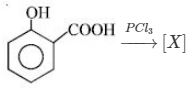
In the given reaction :  $[X]$ will be :


Mass of Urea $\left( NH _2 CONH _2\right)$ required to be dissolved in $1000 g$ of water to reduce the vapour pressure of water by $25 \%$ is $......g$. (Nearest integer) Given: Molar mass of $N,C,O$ and $H$ are $14,12,16$ and $12\,mol ^{-1}$ respectively.
The $\pi$ -acid ligand which uses its $d-$ orbital during synergic bonding in its  complex compound.
A student was carrying out a Grignard reaction between $PhMgBr$ and ethyl  benzoate. She ran out of anhydrous ether just after the Grignard reagent was made. Which of the following solvents can still be used to dissolve the ethyl  benzoate for its reaction with already formed $PhMgBr$ ?
The influence of temperature on the rate of reaction can be found out by
Identify $Z$ in the following series ${C_2}{H_5}I\xrightarrow{{Alco.\,\,KOH}}X\xrightarrow{{B{r_2}}}Y\xrightarrow{{KCN}}Z$
Draw an energy profile diagram for a three step reaction in which first step is  slowest and last step is fastest. (Assume that reaction is exothermic)
A solution containing $2\,g$ of a non-volatile solute in $20\,g$ of water boils at $373.52\,K$. The molecular mass of the solute is $.......g\,mol ^{-1}$. (Nearest integer) Given, water boils at $373\,K,K _{ b }$ for water $=0.52\,K\,kg\,mol ^{-1}$
$ \mathrm{Ag}^{+}+\mathrm{NH}_3 \rightleftharpoons\left[\mathrm{Ag}\left(\mathrm{NH}_3\right)^{+}\right] ; \mathrm{k}_1=3.5 \times 10^{-3} $

$ {\left[\mathrm{Ag}\left(\mathrm{NH}_3\right)\right]^{+}+\mathrm{NH}_3 \rightleftharpoons\left[\mathrm{Ag}\left(\mathrm{NH}_3\right)_2\right]^{+} ; \mathrm{k}_2=1.7 \times 10^{-3}}$

then the formation constant of $\left[\mathrm{Ag}\left(\mathrm{NH}_3\right)_2\right]^{+}$is

Match List $I$ with List $II$

  List $I$   List $II$
$A$ $\alpha$-Glucose and $\alpha-$Galactose $I$ Functional isomers
$B$ $\alpha$-Glucose and $\beta-$-Galactose $II$ Homologous
$C$ $\alpha$-Glucose and $\alpha$-Galactose $III$ Anomers
$D$ $\alpha$-Glucose and $\alpha$-Galactose $IV$ Epimers

Choose the correct answer from the options given below: