Question
An electric current is passed through a conducting solution. List any three possible observations.

Answer

Three possible observations are:
$i.$ The colour of the solution may change depending upon the electrodes.
$ii.$ The temperature of the solution may increase.
$iii.$ Bubbles near the electrodes can be seen.

Need a full question paper?

Generate a complete, print-ready paper with questions like this in minutes — across 16+ boards, with answer keys.

Start Generating Free

Similar questions

Have you thought about how these tiny living beings interact with each other?
Why does a brand new bicycle have shining handlebar and wheel rims? What will happen if these are accidently scratched?
How many images of an object will be formed when the object is placed between two plane mirrors which are inclined at the following angles to one another?
$a. 120^\circ $
$b. 45^\circ $
$c. 180^\circ $
$d. 60^\circ $
$e. 90^\circ $

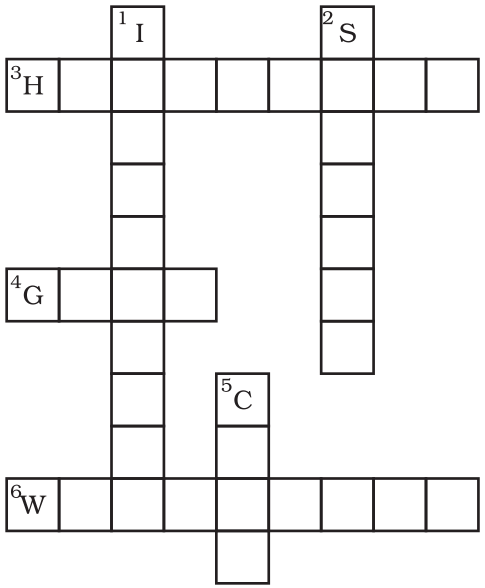
Complete the following word puzzle with the help of clues given below.
Down:
$1.$ Providing water to the crops.
$2.$ Keeping crop grains for a long time under proper conditions.
$5.$ Certain plants of the same kind grown on a large scale.
Across:
$3.$ A machine used for cutting the matured crop.
$4.$ A rabi crop that is also one of the pulses.
$6.$ A process of separating the grain from chaff.
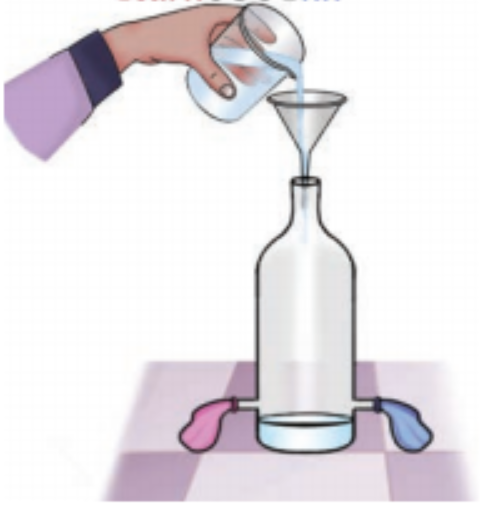
What will happen to the two identical balloons A and B as shown in Figure when water is filled into the bottle up to a certain height? Will both the balloons bulge? If yes, will they bulge equally? Explain your answer.
Image
Write about the natural methods used to maintain soil fertility.
Is deforestation associated with global warming ? Explain.
What is meant by ‘cloning’? State whether gametes are involved in cloning or not. Name two animals which have been produced by cloning.
If wheat is sown in the kharif season, what would happen? Discuss.
A group of students is experimenting. They have two beakers, A and B, each containing 100 mL of water. In beaker A, they add 5 grams of salt and stir. In beaker B, they add 20 grams of salt and stir. They observe that all the salt in beaker A dissolves, but in beaker B, some salt remains at the bottom, even after stirring vigorously.
Q.1. Why did all the salt dissolve in beaker A, but not in beaker B?
Q.2. What kind of solution is formed in beaker A?
Q.3. What about beaker B (considering the undissolved salt)?