MCQ
An electron has a spin quantum number $+1/2$ and magnetic quantum number $-1.$ It cannot be present in :
  • A
    $d-$ orbital
  • B
    $f-$ orbital
  • $s-$ orbital
  • D
    $p-$ orbital

Answer

Correct option: C.
$s-$ orbital
c
For a particular $1$ value there should be $m$ values from $- m$ to $+ m$

For $l=0$, malue should be $0$ indicates $s$ orbital.

For $l=1$, malue should be $-1,0,+1$ indicates $s, p$ orbitals.

For $l=2$, malue should be $-2,-1,0,+1,+2$ indicates $s , p , d$ orbitals.

Fore $l=3$, malue should be $-3,-2,-1,0,+1,+2,+3$ indicates $s , p , d$ orbitals.

For $l$ value $-1$ the electron may present in $p$ or $d$ or $f$ orbital

Need a full question paper?

Generate a complete, print-ready paper with questions like this in minutes — across 16+ boards, with answer keys.

Start Generating Free

Similar questions

The oxidation number of sulphur in ${H_2}{S_2}{O_7}$ and iron in ${K_4}Fe{(CN)_6}$ is respectively
Which of the following statement is wrong
Which of the following is correct for $2p-$ orbitals ?
In which of the following cases $C-C$ bond length will be highest?
The elevation in boiling point for $1$ molal solution of non-volatile solute $A$ is $3\,K$. The depression in freezing point for $2$ molal solution of $A$ in the same solvent is $6\,K$. The ratio of $K _{ b }$ and $K _{ f }$ i.e., $K _{ b } / K _{ f }$ is $1: X$. The value of $X$ is [nearest integer]
Which of following is/are correct ?

$(A)$ Nucleotide form from nucleoside and phosphate group by ether linkage

$(B)$ In nucleoside, nitrogenous base link with hexose sugar of $DNA$ or $RNA$

$(C)$ $DNA$ and $RNA$ are differ in only nature of sugar

$(D)$ $A = T$ and $C \equiv G$ are hydrogen bond between nitrogenous base
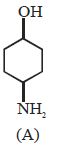
Given below are two statements :
Statement (I) : Kjeldahl method is applicable to estimate nitrogen in pyridine.
Statement (II) : The nitrogen present in pyridine can easily be converted into ammonium sulphate in Kjeldahl method.
In the light of the above statements, choose the correct answer from the options given below.
One mole of an ideal diatomic gas $(C_V = 5\, cal)$ was transformed from initial $25\,^oC$ and $1\,L$ to the state when temperature is $100\,^oC$ and volume $10\,L.$ The entropy change of the process can be expressed as $(R = 2$ calories $/mol / k)$ :-
In Carius method of estimation of halogen. $0.45\,g$ of an organic compound gave $0.36\,g$ of $AgBr$. Find out the percentage of bromine in the compound.Molar masses : $AgBr =188 g mol ^{-1}: Br =80 g mol ^{-1}$ )
Conjugate acid of $(A)$ is