Question

An isolated solid metallic sphere is given +Q charge. The charge will be distributed on the sphere

(a) Uniformly but only on surface

(b) Only on surface but non-uniformly

(c) Uniformly inside the volume

(d) Non-uniformly inside the volume

Answer

(a) Uniformly but only on surface

Need a full question paper?

Generate a complete, print-ready paper with questions like this in minutes — across 16+ boards, with answer keys.

Start Generating Free

Similar questions

A monochromatic beam of light passes from a denser medium into a rarer medium. As a result

(a) Its velocity increases

(b) Its velocity decreases

(c) Its frequency decreases

(d) Its wavelength decreases

Huygen's wave theory allows us to know:
The concept of stationary orbits was proposed by:

A light ray from air is incident (as shown in figure) at one end of a glass fiber (refractive index m = 1.5) making an incidence angle of 60o on the lateral surface, so that it undergoes a total internal reflection.  How much time would it take to traverse the straight fiber of length 1 km

(a) 3.33 m sec

(b) 6.67 m sec

(c) 5.77 m sec

(d) 3.85 m sec

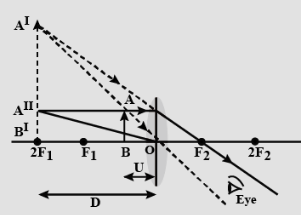
Figure shows the ray diagram of a:

Quantam nature of light is explained by which of the following phenomenon

(a) Huygen wave theory

(b) Photoelectric effect

(c) Maxwell electromagnetic theory

(d) de-Broglie theory

Peltier coefficient for the junction of a pair of metals is proportional to

(a) T absolute temperature of the junction

(b) Square of absolute temperature of the junction

(c)  

(d)  

The magnitude of the vector product of two vectors $\big|\overrightarrow{\text{A}}\big|$ and $\big|\overrightarrow{\text{B}}\big|$ may be:
  1. Greater than AB.
  2. Equal to AB.
  3. Less than AB.
  4. Equal to zero.
A wheel of radius 20cm is pushed to move it on a rough horizontal surface. It is found to move through a distance of 60cm on they road during the time it completes one revolution about the centre. Assume that the linear and the angular accelerations are uniform. The frictional force acting on the wheel by the surface is:
  1. Along the velocity of the wheel.
  2. Opposite to the velocity of the wheel.
  3. Perpendicular to the velocity of the wheel.
  4. Zero.
In series combination of R, L, C with an A.C source at resonanace, if R = 20 ohm, then impedence Z of the combination is.