Question
An object is released from rest. The time it takes to fall through a distance h and the speed of the object as it falls through this distance are measured with a pendulum clock. The entire apparatus is taken on the moon and the experiment is repeated:
  1. The measured times are same.
  2. The measured speeds are same.
  3. The actual times in the fall are equal.
  4. The actual speeds are equal.

Answer

  1. The measured times are same.
  2. The measured speeds are same.
Explanation:
The effect of gravity on the object as well as on the pendulum clock is same in both cases the time measured is also same. As the time measured is same, the speeds are same.

Need a full question paper?

Generate a complete, print-ready paper with questions like this in minutes — across 16+ boards, with answer keys.

Start Generating Free

Similar questions

The maximum focal length of the eye-lens of a person is greater than its distance from the retina. The eye is:
  1. Always strained in looking at an object.
  2. Strained for objects at large distances only.
  3. Strained for objects at short distances only.
  4. Unstrained for all distances.
Two resistance A and B are made up of same substance. Length and radius of wire A is twice that of B. Ratio of resistances of A and B are:
In electromagnetic induction, the induced charge in a coil is independent of(a) Change in the flux(b) Time(c) Resistance in the circuit(d) None of the above
   
   
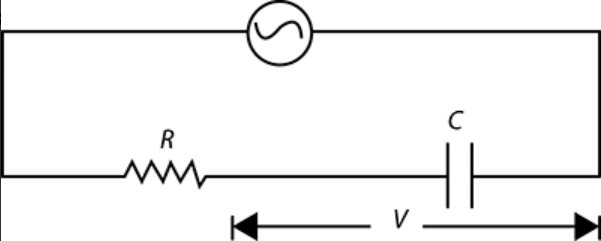
A resistance R and a capacitor C are joined to a source of AC of constant e.m.f and variable frequency. The potential difference across C is V. If the frequency of AC is gradually increased, V will
Image
The inductance of a solenoid $0.5 m$ long of cross$-$sectional area $20 \ cm^2$ and with $500$ turns is
A plano convex lens (f = 20cm) is silvered at plane surface. Now f will be(a) 20 cm (b) 40 cm(c) 30 cm (d) 10 cm
       
A thermo couple develops 200μV between 0℃  and 100℃. If it develops 64μV  and 76μV  respectively between (0℃ - 32℃)  and (32℃ - 70℃) then what will be the thermo emf it develops between 70℃  and 100℃ (a) 65 μV(b) 60 μV(c) 55 μV   (d) 50 μV
       
Copper and germanium are cooled from room temperature to 30 K. In this process, the resistance:
If the dielectric constant and dielectric strength be denoted by k and x respectively, then a material suitable for use as a dielectric in a capacitor must have(a) High k and high x(b) High  k and low x(c) Low k and low x(d) Low k  and high  x
       
The conductivity of a superconductor is(a) Infinite(b) Very large(c) Very small(d) Zero