MCQ
____ And _____ led to understanding of atomic structures:
- Fresnel diffraction.
- Cathode rays.
- X-rays.
- Electrons.
- A(i) And (ii).
- B(ii) And (iii).
- C(i) And (iv).
- D(iii) And (iv).
Generate a complete, print-ready paper with questions like this in minutes — across 16+ boards, with answer keys.
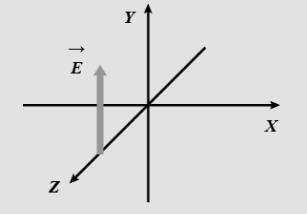
A conducting sphere of radius R = 20 cm is given a charge Q = 16μC. What is  at centre
|
(a) 3.6 |
(b) 1.8 |
(c) Zero |
(d) 0.9 |
If a torch is used in place of monochromatic light in Young’s experiment what will happens
|
(a) Fringe will appear for a moment then it will disappear |
|
(b) Fringes will occur as from monochromatic light |
|
(c) Only bright fringes will appear |
|
(d) No fringes will appear |
A 4 mF capacitor, a resistance of 2.5 MW is in series with 12 V battery. Find the time after which the potential difference across the capacitor is 3 times the potential difference across the resistor. [Given ln(2)= 0.693]
|
(a) 13.86 s |
(b) 6.93 s |
(c) 7 s |
(d) 14 s |
Which of the following has a larger chromatic aberration?
A capacitor is charged by using a battery which is then disconnected. A dielectric slab is then slipped between the plates, which results in
|
(a) Reduction of charge on the plates and increase of potential difference across the plates |
|
(b) Increase in the potential difference across the plate, reduction in stored energy, but no change in the charge on the plates |
|
(c) Decrease in the potential difference across the plates, reduction in the stored energy, but no change in the charge on the plates |
|
(d) None of the above |
