Question
Answer the following

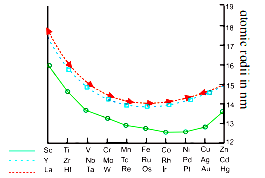
Explain the trends in atomic radii of d block elements.
Answer

  1. Atomic radii of the elements of the transition series decrease gradually from left to right.
  2. As we move across a transition series from left to right, the nuclear charge increases by one unit at a time.
  3. The last filled electron enters a penultimate (n - 1)d subshell. However, d orbitals in an atom are less penetrating or more diffused and, therefore d electrons offer smaller screening effects.
  4. The result is that effective nuclear charge also increases as the atomic number increases along with a transition series. Hence, the atomic radii gradually decrease across a transition series from left to right.

    Trends in atomic radii of d block elements

Need a full question paper?

Generate a complete, print-ready paper with questions like this in minutes — across 16+ boards, with answer keys.
Start Generating Free

Similar questions

Explain with vapour pressure-temperature curves that the freezing point of a solvent is lowered by dissolving a nonvolatile solute into it. Give reason for such lowering of freezing of solvent.
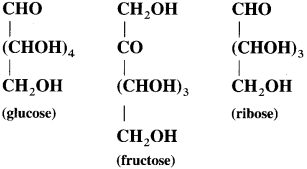
Observe the following structural formulae carefully and answer the questions.

Image

(1) How many OH groups are present in glucose, fructose and ribose respectively?
(2) Which other functional groups are present in these three compounds?

Calculate $E ^0$ Cell, $\Delta G ^0$ and equilibrium constant for the reaction $2 Cu ^{+} \rightarrow Cu ^{2+}+ Cu$.
$E ^0 Cu ^{+} / Cu =0.52 V$ and $E ^0 Cu ^{2+}, Cu +=0.16 V$.
For the reaction,
$N _2( g )+3 H _2( g ) \rightarrow 2 NH _3( g )$, what is the relationship among $\frac{ d \left[ N _2\right]}{ dt } \frac{ d \left[ H _2\right]}{ dt }$ and $\frac{ d \left[ NH _3\right]}{ dt }$ ?
Calculate emf of the following cell at $25^\circ C$.
$Zn_{(s)}| Zn^{2+}(0.08M)||Cr^{3+}(0.1M)|Cr$
$E^0_{Zn} = – 0.76 V, E^0_{Cr} = – 0.74 V$
Describe the construction and working of lead accumulator $($lead storage cell$).$
Draw a neat labelled diagram of the lead accumulator. Explain the reactions involved in discharging and charging this cell. Represent this cell using cell conventions.
How catalyst increases the rate of reaction? Explain with the help of a potential energy diagram for catalyzed and uncatalyzed reactions.
Write reaction showing conversion of p- bromoisopropyl benzene into p-Isopropyl benzoic acid (3 steps).
Mention the solvent and solute in the following :
(1) Smoke
(2) Moisture
(3) Alloy
(4) Soda water.
Draw enantiomers of $[Cr(OX)_2]^3$​​​​​​​ where $OX = C_2O4$ :