MCQ
Anti$-$particle of proton is:
  • A
    Electron
  • Antiproton
  • C
    Positron
  • D
    Neutron

Answer

Correct option: B.
Antiproton

antiparticle of proton is antiproton.

Need a full question paper?

Generate a complete, print-ready paper with questions like this in minutes — across 16+ boards, with answer keys.
Start Generating Free

Similar questions

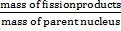
In any fission process the ratio is
In a uniform electric field, the potential is $10$ $V $ at the origin of coordinates, and $8$ $V$ at each of the points $(1, 0, 0), (0, 1, 0) $ and $(0, 0, 1)$. The potential at the point $(1, 1, 1)$ will be....$V$
Light from a hydrogen discharge tube is incident on the cathode of a photoelectric cell the work function of the cathode surface is $4.2\ eV$. In order to reduce the photo-current to zero the voltage of the anode relative to the cathode must be made ........... $V$
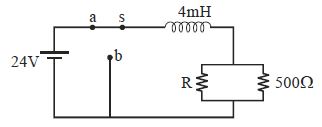
In given circuit, switch is in position $a$ , for what value of $R$ will the circuit have a time constant of $10\,\mu s$.......$K\Omega $
The resistivity of a potentiometer wire is $40 \times {10^{ - 8}}\,ohm - m$ and its area of cross-section is $8 \times {10^{ - 6}}\,{m^2}$. If $0.2\, amp$ current is flowing through the wire, the potential gradient will be
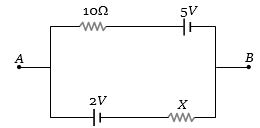
If ${V_{AB}} = 4\,V$ in the given figure, then resistance $X$ will be .............. $\Omega$
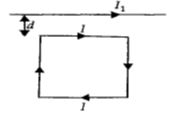
A square loop, carrying a steady current $I,$ is placed in a horizontal plane near a long straight conductor carrying a steady current $I_1$ at a distance $d$ from the conductor as shown in figure. The loop will experience
According to Bohr’s theory of $H$ atom, an electron can revolve around a proton indefinitely, if its path is:
Given below are two statements: one is labelled as Assertion $A$ and the other is labelled as Reason $R$

Assertion $A$: The phase difference of two light waves change if they travel through different media having same thickness, but different indices of refraction.

Reason $R:$ The wavelengths of waves are different in different media.

In the light of the above statements, choose the most appropriate answer from the options given below

The time taken for the magnetic energy to reach $25\, \%$ of its maximum value, when a solenoid of resistance $R ,$ inductance $L$ is connected to a battery, is :