Question
Assertion (A) : A row matrix and a column matrix cannot be added.
Reason (R) : We can only add two matrices of the same order.

Answer

Self

Need a full question paper?

Generate a complete, print-ready paper with questions like this in minutes — across 16+ boards, with answer keys.

Start Generating Free

Similar questions

Assertion (A) : The sum of first 9 terms of the GP 3,6,12, $\ldots$ is 1533.
Reason (R) : The sum of first $n$ terms of a GP is given by $S _n=\frac{a\left(r^n-1\right)}{r-1}$.
Assertion (A) : We can always find the product of a matrix and its transpose.
Reason (R) : We can always multiply two matrices of the same order.
Assertion (A) : In the figure, $O$ is the centre of the circle. The value of $\angle \mathrm{ACB}$ is also $40^{\circ}$.
Reason (R): The angle subtended by an arc of a circle at the centre is double the angle subtended by it at any point on the remaining part of the circle.
Image
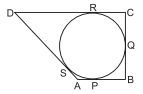
Assertion (A) : In the figure, $A B+C D=B C+A D$
Reason (R) : The legnth of two tangents than can be drawn to a circle from an exterior point are equal.
Image
Assertion: Rita buys an article from Rajiv for 780. If they both live in the same city and the rate of GST is 10%, then the SGST paid by Rita is 39.
Reason : In case of intra-state transactions, CGST $=$ SGST $=\frac{1}{2}$ CST.
Assertion (A): Two congruent triangles are similar but two similar triangles need not be congruent.
Reason (R): The areas of two similar triangles are proportional to their corresponding sides.
Assertion: If a die is thrown, the probability of getting a number less than 4 and greater than 3 is zero.
Reason: Probability of an impossible event is zero.
Assertion (A) : There is one and only one tangent at any point on the circumference of a circle,
Reason (R) : A line which intersects a circle at two distinct points is called a secant to the circle.
Assertion : If fourth term of an A.P. is zero, then its $25^{\text {th }}$ term is three times its $11^{\text {th }}$ term.
Reason : The sum of first $n$ terms of an A.P. is given by $\frac{n}{2}(a+l)$, where, $l$ is the last term.
Assertion: The sum of first 5 terms of the list of numbers $3,6,12 \ldots$ is 93 .
Reason : The sum of first n terms of an G.P. is given by $\frac{a\left(1-r^*\right)}{(1-r)}$; if $r <1$