Question
Assertion : A physical quantity cannot be called as a vector if its magnitude is zero.
Reason $\quad:$ A vector has both, magnitude and direction.

Answer

(e) If a vector quantity has zero magnitude then it is called a null vector. That quantity may have some direction even if its magnitude is zero.

Need a full question paper?

Generate a complete, print-ready paper with questions like this in minutes — across 16+ boards, with answer keys.
Start Generating Free

Similar questions

Assertion : A rocket works on the principle of conservation of linear momentum.
Reason : Whenever there is a change in momentum of one body, the same change occurs in the momentum of the second body of the same system but in the opposite direction.
Assertion : If two protons are brought near one another, the potential energy of the system will increase.
Reason : The charge on the proton is $+1.6 \times 10^{-19} \mathrm{C}$.
Assertion : Identical springs of steel and copper are equally stretched. More work will be done on the steel spring.
Reason : Steel is more elastic than copper.
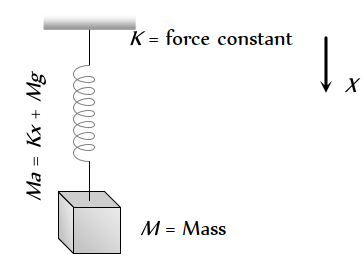
Assertion : Consider motion for a mass spring system under gravity, motion of $M$ is not a simple harmonic motion unless $M g$ is negligibly small.
Reason : For simple harmonic motion acceleration must be proportional to displacement and is directed towards the mean position

Image

Assertion : An empty test tube dipped into water in a beaker appears silver, when viewed from a suitable direction.
Reason : Due to refraction of light, the substance in water appears silvery.
Assertion : The percentage change in time period is $1.5 \%$, if the length of simple pendulum increases by $3 \%$.
Reason : Time period is directly proportional to length of pendulum.
Assertion : A beam of white light gives a spectrum on passing through a hollow prism.
Reason : Speed of light outside the prism is different from the speed of light inside the prism.
Assertion : Fuse wire must have high resistance and low melting point.
Reason : Fuse is used for small current flow only.
Assertion : A body subjected to three concurrent forces cannot be in equilibrium.
Reason : If large number of concurrent forces acting on the same point, then the point will be in equilibrium, if sum of all the forces is equal to zero.
Assertion : In a S.H.M., kinetic and potential energies become equal when the displacement is $1 / \sqrt{2}$ times the amplitude.
Reason : In SHM, kinetic energy is zero when potential energy is maximum.