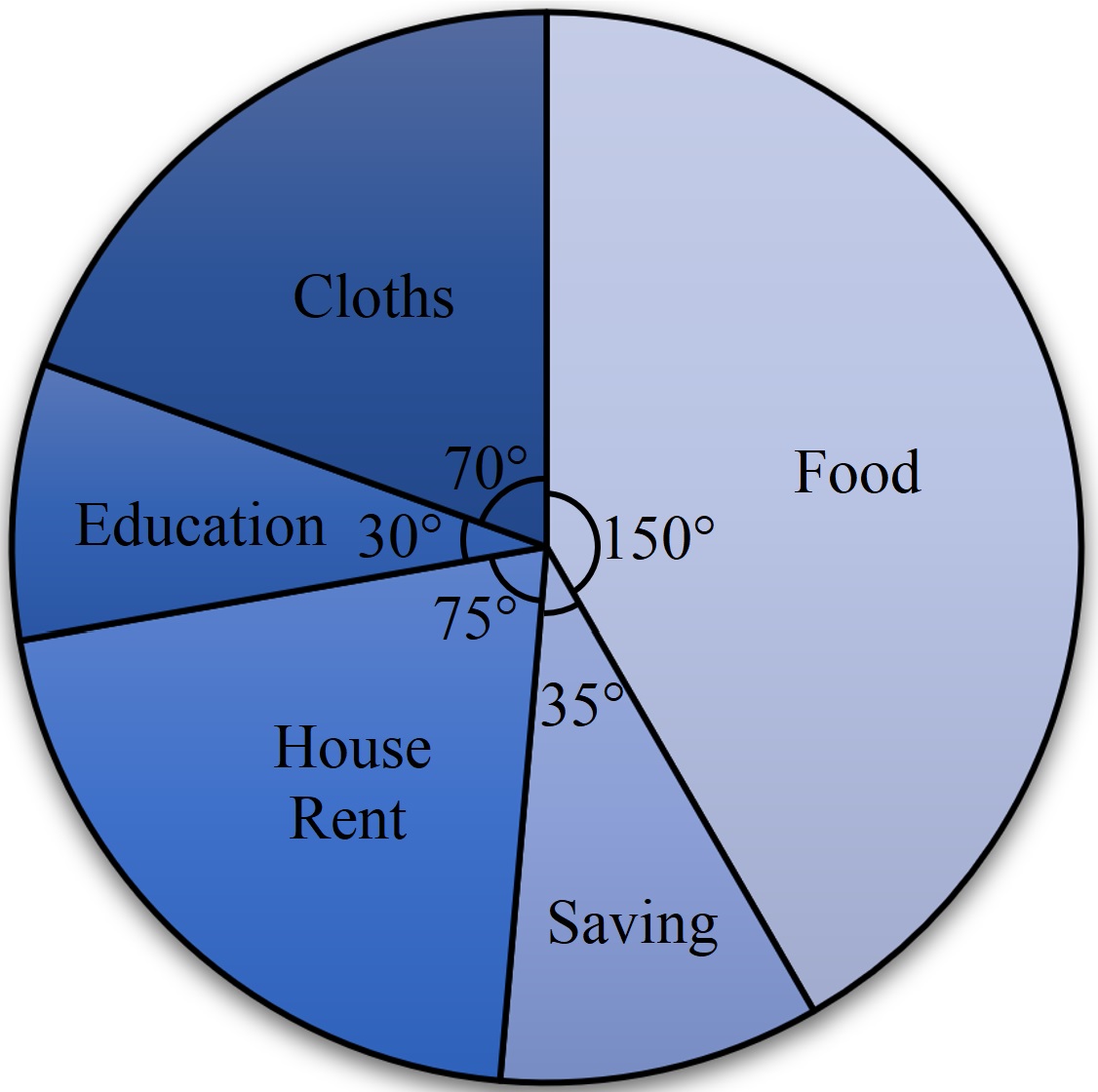
MCQ
Assertion (A): Rational numbers are not closed under multiplication
Reason (R): A rational number is a number that is in the form of $\frac{\text{p}}{\text{q}}$ where p and q are integers, and q is not equal to 0.
  • A
    Both A and R are true and R is the correct explanation of A
  • B
    Both A and R are true but R is not the correct explanation of A
  • C
    A is true but R is false
  • A is false but R is true

Answer

Correct option: D.
A is false but R is true
D

Need a full question paper?

Generate a complete, print-ready paper with questions like this in minutes — across 16+ boards, with answer keys.

Start Generating Free

Similar questions

Assertion (A): $\frac{1}{2}$ of 2 is a rational number
Reason (R): a rational number is a type of real numbers, which is in the form of $\frac{\text{p}}{\text{q}}$ where q is not equal to zero
Directions: In the following questions, the Assertions $(A)$ and Reason$(s)$ $(R)$ have been put forward. Read both the statements carefully and choose the correct alternative from the following:
Assertion $(A)$: The ratio $1 : 4$ converted to percentage is $25\%$.
Reasons $(R)$: A ratio can be defined as the relationship or comparison between two numbers of the same unit to check how bigger is one number than the other one
Assertion (A): There exists a unique rational number whose additive inverse and multiplicative inverse do not exist.
Reason (R) : The additive inverse of 1 is -1 and its multiplicative inverse is 1 .
Assertion (A): (-1)50 is equal to 50.
Reasons (R): An exponent refers to the number of times a number is multiplied by itself.
Directions: In the following questions, the Assertions $(A)$ and Reason(s) $(R)$ have been put forward. Read both the statements carefully and choose the correct alternative from the following:Observe the figure as reasons for the following assertions:-
Class interval Age (in year) Number of persons
$15-20$ $12$
$20-25$ $20$
$25-30$ $42$
$30-35$ $20$
$35-40$ $6$
Assertion (A): $25 - 30$ has the highest frequency.
Assertion (A): 53 × 5 - 1 is equal to52.
Reasons (R): product of powers property.
Assertion (A): a × (b × c) = (a × b) × c is called associative law for multiplication
Reason (R): The associative laws state that when you add or multiply any three real numbers, the grouping (or association) of the numbers does not affect the result.
Assertion (A): A trader marks his goods at $10 \%$ above the cost price and allows a discount of 10%. Thus, he loses $1 \%$.
Reason (R): Discount is always reckoned on the selling price.
Assertion (A): Since 9 is a perfect square, so each one of 0.9, 0.09, 0.009, 0.0009 is a perfect square.
Reason (R): $0.9=\frac{9}{10}, 0.09=\frac{9}{100}, 0.009=\frac{9}{1000}, 0.0009=\frac{9}{10000}$.