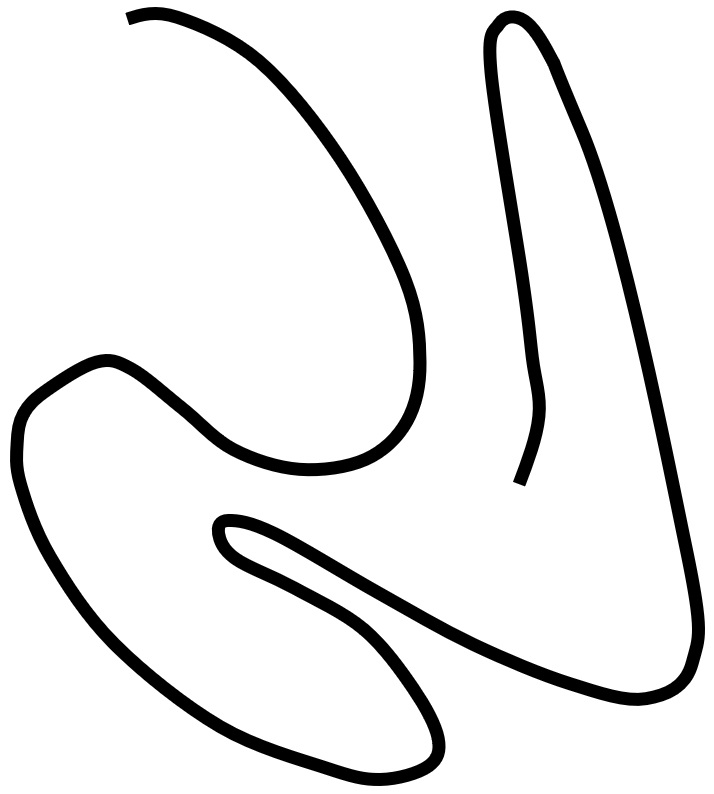
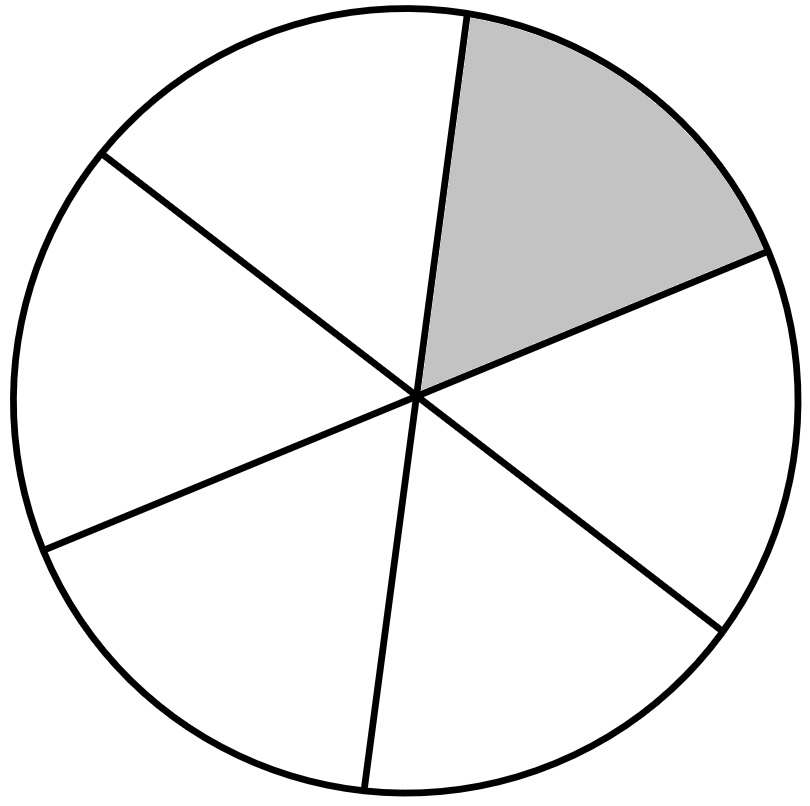
MCQ
Assertion (A): The vertex is the common initial point of the two rays forming the angle.
Reason (R): The two rays forming an angle are called the two legs of the angle.
  • A
    Both Assertion (A) and Reason (R) are true and Reason (R) is the correct explanation of Assertion (A).
  • B
    Both Assertion (A) and Reason (R) are true and Reason (R) is not the correct explanation of Assertion (A).
  • Assertion (A) is true but Reason (R) is false.
  • D
    Assertion (A) is false but Reason (R) is true.

Answer

Correct option: C.
Assertion (A) is true but Reason (R) is false.
C

Need a full question paper?

Generate a complete, print-ready paper with questions like this in minutes — across 16+ boards, with answer keys.

Start Generating Free

Similar questions

Directions: In the following questions, the Assertions $(A)$ and Reason$(s)$ $(R)$ have been put forward. Read both the statements carefully and choose the correct alternative from the following:
Assertion (A):
Reason (R): Line extends indefinitely in both directions
Assertion (A): $\frac{3}{7}$ is greater than $\frac{3}{5}$.
Reason (R): Among two fractions with the same numerator, the one with the smaller denominator is the greater of the two.
Directions: In the following questions, the Assertions $(A)$ and Reason$(s)$ $(R)$ have been put forward. Read both the statements carefully and choose the correct alternative from the following:
Assertion (A):
 

Reason (R): A curve is a shape or a line which is smoothly drawn in a plane having a bent or turns in it
Directions: In the following questions, the Assertions $(A)$ and Reason(s) $(R)$ have been put forward. Read both the statements carefully and choose the correct alternative from the following:
Assertion (A): Any point on the perpendicular bisector is equidistant from the endpoints of the line segment.
Reason (R): a line or a segment perpendicular to a segment that passes through the midpoint of the segment
Assertion (A): The successor of – 1 is 0.
Reason (R): Successor is the number which comes after a number.
Directions: In the following questions, the Assertions $(A)$ and Reason(s) $(R)$ have been put forward. Read both the statements carefully and choose the correct alternative from the following:
Assertion (A): $1\ kg 500g = 1.25\ kg$
 Reason (R): The unit of measurement for weight is that of force, which in the International System of Units (SI) is newton.
Directions: In the following questions, the Assertions $(A)$ and Reason(s) $(R)$ have been put forward. Read both the statements carefully and choose the correct alternative from the following:
Assertion (A): $(- 1) + (- 1) = -2$
Reason (R): The addition is taking two or more numbers and adding them together.
Directions: In the following questions, the Assertions $(A)$ and Reason$(s)$ $(R)$ have been put forward. Read both the statements carefully and choose the correct alternative from the following:
Assertion (A): $180^\circ $ and $360^\circ $ are reflex angles
Reason (R): An angle whose measure is greater than $180^\circ $ but less than $360^\circ $ is termed as a reflex angle
Directions: In the following questions, the Assertions $(A)$ and Reason(s) $(R)$ have been put forward. Read both the statements carefully and choose the correct alternative from the following:
Assertion (A): ¼ fraction of $₹ 1$ is $50$ paise

Reason (R): a fraction is a number representing part of a whole
Directions: In the following questions, the Assertions $(A)$ and Reason$(s)$ $(R)$ have been put forward. Read both the statements carefully and choose the correct alternative from the following:
Assertion (A): $M$ has vertical line of symmetry
Reason (R): The symmetry of an object is defined as one half of the object is a mirror image of the other half