MCQ
Assertion (A): Whole numbers are not commutative for division
Reason (R): Rational numbers are commutative under addition and multiplication
  • Both A and R are true and R is the correct explanation of A
  • B
    Both A and R are true but R is not the correct explanation of A
  • C
    A is true but R is false
  • D
    A is false but R is true

Answer

Correct option: A.
Both A and R are true and R is the correct explanation of A
A

Need a full question paper?

Generate a complete, print-ready paper with questions like this in minutes — across 16+ boards, with answer keys.

Start Generating Free

Similar questions

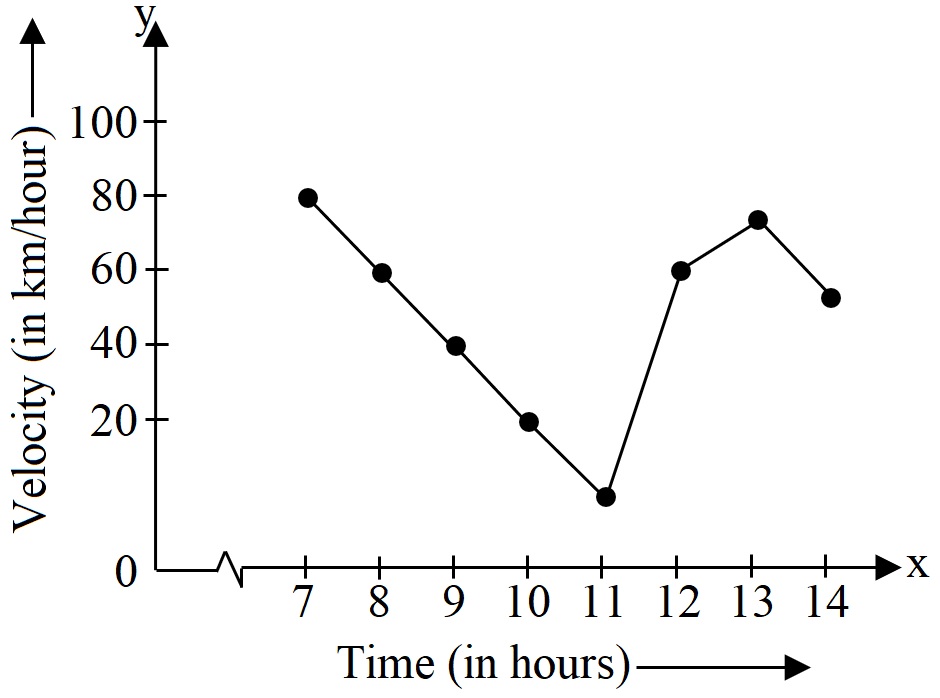
Observe the following velocity-time graph and consider it as reasons for the following assertions:

Assertion (A): 7 is the velocity maximum.
Assertion (A): The heights of two right circular cylinders are the same. Their volumes are respectively 16 $\pi$ m3 and 81 $\pi$ m3. The ratio of their base radii is 4 : 9
Reasons (R): a ratio indicates how many times one number contains another.
Directions: In the following questions, the Assertions $(A)$ and Reason$(s) (R)$ have been put forward. Read both the statements carefully and choose the correct alternative from the following:
Assertion $(A)$: The coefficient in the term $20xyz$ is $20$
Reasons $(R)$: A coefficient is a number multiplied by a variable
Directions: In the following questions, the Assertions $(A)$ and Reason(s) $(R)$ have been put forward. Read both the statements carefully and choose the correct alternative from the following:
Assertion (A): The coefficient in the term $7xy$ is $7$
Reasons (R): A coefficient is a number multiplied by a variable
Directions : In the following questions, the Assertions $(A)$ and Reason $(s)\ (R)$ have been put forward. Read both the statements carefully and choose the correct alternative from the following:
Assertion $ (A): a \times (b \times c) = (a \times b) \times c$ is called associative law for multiplication
Reason $(R) :$ The associative laws state that when you add or multiply any three real numbers, the grouping $($or association$)$ of the numbers does not affect the result.
Directions: In the following questions, the Assertions $(A)$ and Reason(s) $(R)$ have been put forward. Read both the statements carefully and choose the correct alternative from the following: Observe the following histograma nd consider it as reasons for the following assertions:
Assertion (A): $20 - 25$ have the maximum number of students
Assertion (A): Total surface area of a cylinder = $2 \pi r(h+r)$, where r = radius of base and h = height of cylinder.
Reason (R): Total surface area of a cylinder = curved surface area + area of circular base + area of circular top.
Assertion (A): In selling a plot of land for Rs 61200, a profit of 20% is made. The cost price of the plot is Rs 51000.
Reasons (R): Cost price is the total amount of money that it costs a manufacturer to produce a given product or provide a given service.
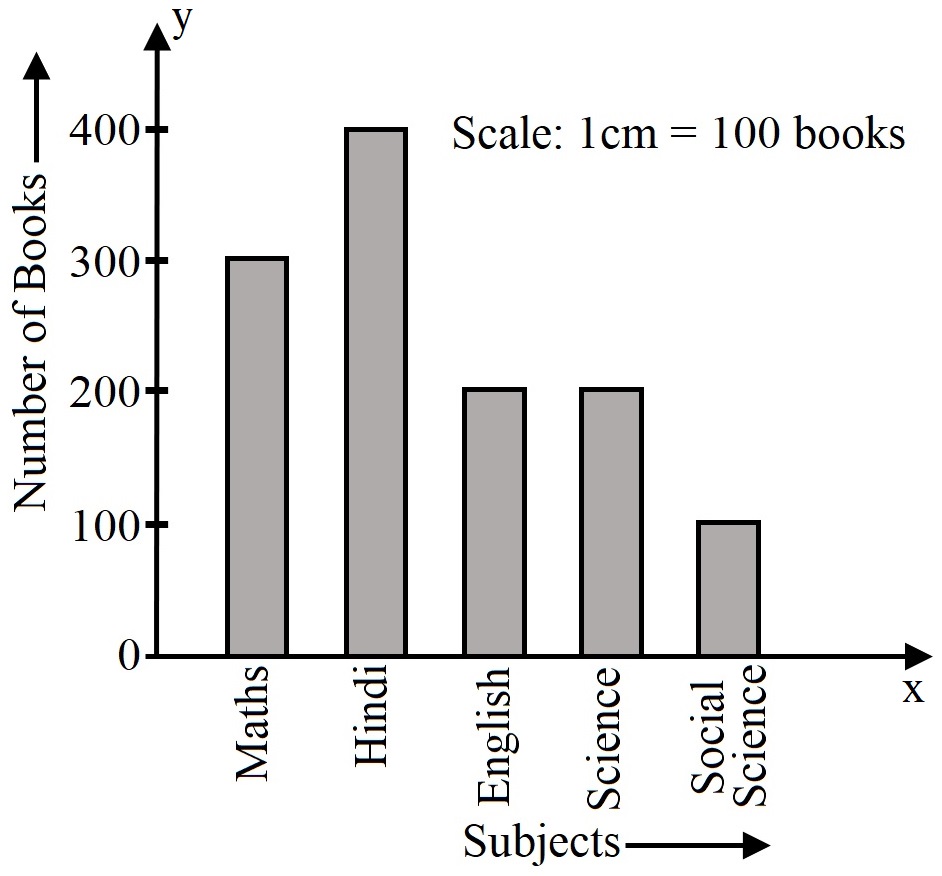
Directions: In the following questions, the Assertions $(A)$ and Reason(s) $(R)$ have been put forward. Read both the statements carefully and choose the correct alternative from the following: Observe the figure as reasons for the following assertions:
Assertion (A): English and Science have same books.
Directions: In the following questions, the Assertions $(A)$ and Reason(s) $(R)$ have been put forward. Read both the statements carefully and choose the correct alternative from the following:
Assertion (A): The root of the equation $\frac{\text{y}}{3}-7 = {11}$ is $-54$
Reason (R): The value of the variable which makes left hand side equal to right hand side in the given equation is called the solution or the root of the equation