MCQ
Assertion : Current is passed through a metallic wire, heating it red. When cold water is poured on half of its portion, then rest of the half portion become more hot.
Reason : Resistances decreases due to decrease in temperature and so current through wire increases.
  • If both assertion and reason are true and the reason is the correct explanation of the assertion.
  • B
    If both assertion and reason are true but reason is not the correct explanation of the assertion
  • C
    If assertion is true but reason is false.
  • D
    If the assertion and reason both are false.
Answer

Correct option: A.
If both assertion and reason are true and the reason is the correct explanation of the assertion.
 If both assertion and reason are true and the reason is the correct explanation of the assertion.

Need a full question paper?

Generate a complete, print-ready paper with questions like this in minutes — across 16+ boards, with answer keys.

Start Generating Free

Similar questions

A thin glass (refractive index $1.5$) lens has optical power of $-5\,D$ in air. Its optical power in a liquid medium with refractive index $1.6$ will be
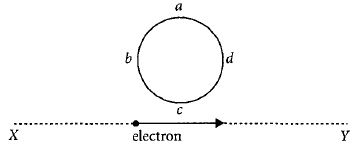
An electron moves on a straight line path $XY$ as shown. The $abcd$ is a coil adjacent to the path of electron. What will be the direction of current, if any, induced in the coil?
Three plates of common surface area $A$ are connected as shown. The effective capacitance will be
$12$ cells each having the same emf are connected in series and are kept in a closed box. Some of the cells are wrongly connected. This battery is connected in series with an ammeter and two cells identical with each other and also identical with the previous cells. The current is $3\, A$ when the external cells aid this battery and is $2\,A$ when the cells oppose the battery. How many cells in the battery are wrongly connected :-
Nuclear fusion is common to the pair
The relative atomic masses of many elements are not whole numbers because:
Photoelectric effect was explained by :
Which of the following waves have the maximum wavelength
The coil of the moving coil galvanometer is wound over an aluminium frame:
In one model of the electron, the electron of mass $m_e$ is thought to be a uniformly charged shell of radius $R$ and total charge $e$, whose electrostatic energy $E$ is equivalent to its mass $m_e$ via Einstein's mass energy relation $E=m_e c^2$. In this model, $R$ is approximately $\left(m_e=9.1 \times 10^{-31} \,kg , c=3 \times 10^8 \,ms ^{-1}\right.$, $1 / 4 \pi \varepsilon_0=9 \times 10^9 \,Fm ^{-1}$, magnitude of the electron charge $=1.6 \times 10^{-19} \,C$ )