Question

Assertion :  The poles of magnet cannot be separated by breaking into two pieces.

Reason     : The magnetic moment will be reduced to half when a magnet is broken into two equal pieces.

(a) If both assertion and reason are true and the reason is the correct explanation of the assertion.

(b) If both assertion and reason are true but reason is not the correct explanation of the assertion.

(c) If assertion is true but reason is false.

(d) If the assertion and reason both are false.

Answer

(b) If both assertion and reason are true but reason is not the correct explanation of the assertion.

Need a full question paper?

Generate a complete, print-ready paper with questions like this in minutes — across 16+ boards, with answer keys.

Start Generating Free

Similar questions

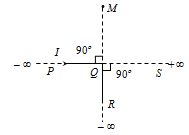
An infinitely long conductor PQR is bent to form a right angle as shown. A current I flows through PQR The magnetic field due to this current at the point M is H1. Now another infinitely long straight conductor QS is connected at Q so that the current is I/2 in QR as well as in QS, The current in PQ remaining unchanged. The magnetic field at M is now  The ratio   is given by

(a)   

(b) 1

(c)  

(d) 2 

The dual nature of light is exhibited by

(a) Photoelectric effect

(b) Refraction and interference

(c) Diffraction and reflection

(d) Diffraction and photoelectric effect

The area of a coil is 500cmand the number of turns in it is 2000. It is kept perpendicular to a magnetic field of induction 4 × 10⁻⁵Wb/ m2. The coil is rotated through 180 in 0.1 second. If the resistance of the total circuit is 20Ω, then the value of the induced charge flowing in the circuit will be :

Rutherford’s a - particle experiment showed that the atoms have

(a) Proton

(b) Nucleus

(c) Neutron

(d) Electrons

A presbyopic patient has near point as 30 cm and far point as 40 cm. The dioptric power for the corrective lens for seeing distant objects is

(a) 40 D   

(b)  4 D  

(c)   – 2.5 D

(d)  0.25 D  

If two bodies A and B (A bigger in size than B) are rubbed together, then:

For principal quantum number n = 3, the possible values of orbital quantum number ‘l’ are

(a) 1, 2, 3

(b) 0, 1, 2, 3

(c) 0, 1, 2

(d) –1, 0, +1

The mass of a neutron is:
In the Fraunhofer diffraction experiment of single aperture, the condition of path difference ( $\Delta$ ) for the secondary maximum of $n^{\text {th }}$ order is :
If $\mu_0$is absolute permeability of vacuum and $\mu\text{r}$ is relative magnetic permeability of another medium, then permeability $\mu$ of the medium is: