Question
Assertion : The resistivity of a semiconductor increases with temperature.
Reason     : The atoms of a semiconductor vibrate with larger amplitude at higher temperature there by increasing it's resistivity.(a) If both assertion and reason are true and the reason is the correct explanation of the assertion.(b) If both assertion and reason are true but reason is not the correct explanation of the assertion.(c) If assertion is true but reason is false.(d) If the assertion and reason both are false.


Answer

(d) If the assertion and reason both are false.

Need a full question paper?

Generate a complete, print-ready paper with questions like this in minutes — across 16+ boards, with answer keys.

Start Generating Free

Similar questions

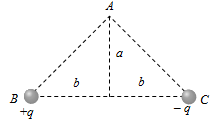
As shown in the figure, charges $+q$ and $-q$ are placed at the vertices $B$ and $C$ of an isosceles triangle. The potential at the vertex $A$ is
Kinetic energy with which the electrons are emitted from the metal surface due to photoelectric effect is (a) Independent of the intensity of illumination(b) Independent of the frequency of light(c) Inversely proportional to the intensity of illumination(d) Directly proportional to the intensity of illumination


The focal length of the objective of a compound microscope is:
Two ends of a conducting rod of varying cross-section are maintained at $200^∘C$ and $0^∘C$ respectively, figure. In steady state.image
If a slab of insulating material $4 \times 10^{-3}m$ thick is introduced between the plates of a parallel plate capacitor, the separation between plates has to be increased by $3.5 \times 10^{-3}m$  to restore the capacity to original value. The dielectric constant of the material will be
The direction of magnetic lines of forces close to a straight conductor carrying current will be(a) Along the length of the conductor(a) Along the length of the conductor(c) Circular in a plane perpendicular to the conductor(d) Helical


A coil having an inductance of 0.5 H carries a current which is uniformly varying from zero to 10 ampere in 2 second. The e.m.f. (in volts) generated in the coil is(a) 10(b) 5 (c) 2.5(d) 1.25
       
Nuclear forces are(a) Short ranged attractive and charge independent(b) Short ranged attractive and charge dependent(c) Long ranged repulsive and charge independent(d) Long ranged repulsive and charge dependent


Which among the following cannot be the charge of a charged body?
Two small spheres with masses $M_{1​}$ and $M_{2​}$ hang on weightless, insulating threads with lengths $L_1​$ and $L_2​.$ The two spheres carry a charge of $Q_{1​}$ and $Q_2$​ respectively. The spheres hang such that they are level with one another and the threads are inclined to the vertical at angles $\theta_1$​ and $\theta_2$. Which of the following conditions is required if $\theta_1​=\theta _2​.$