MCQ
Assertion : When a tiny circular obstacle is placed in the path of light from some distance, a bright spot is seen at the centre of shadow of the obstacle.
Reason : Destructive interference occurs at the centre of the shadow.
  • A
     If both assertion and reason are true and the reason is the correct explanation of the assertion.
  • B
     If both assertion and reason are true but reason is not the correct explanation of the assertion.
  •  If assertion is true but reason is false.
  • D
     If the assertion and reason both are false.
Answer

Correct option: C.
 If assertion is true but reason is false.
 If assertion is true but reason is false.

Need a full question paper?

Generate a complete, print-ready paper with questions like this in minutes — across 16+ boards, with answer keys.

Start Generating Free

Similar questions

Some radioactive nucleus may emit
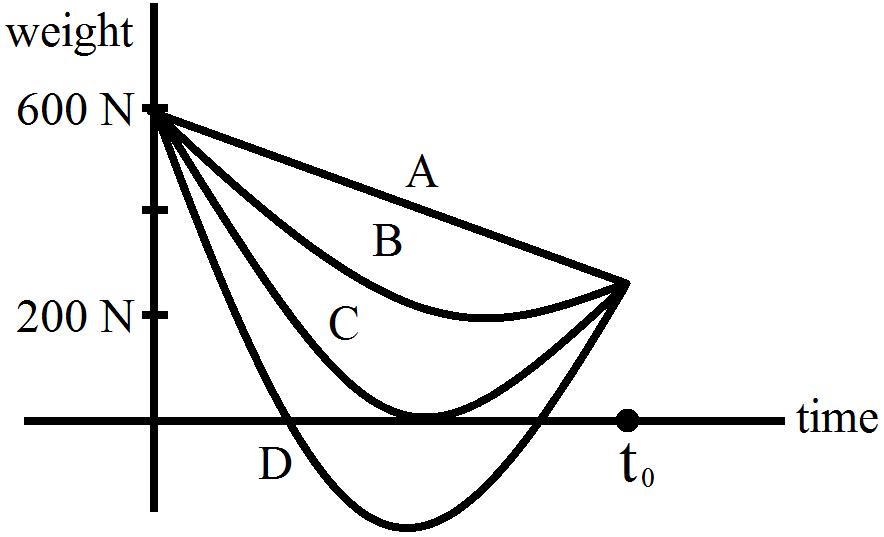
Suppose, the acceleration due to gravity at the earth's surface is $10ms^{-2}$ and at the surface of Mars it is $4⋅0ms^{-2}$. A 60kg passenger goes from the earth to the Mars in a spaceship moving with a constant velocity. Neglect all other objects in the sky. Which part of best represents the weight (net gravitational force) of the passenger as a function of time?
What will be the angle of diffracting for the first minimum due to Fraunhoffer diffraction with sources of light of wave length 550 nm and slit of width 0.55 mm
The wrong statement about electric lines of force is
A very long bar magnet is placed with its north pole coinciding with the centre of a circular loop carrying as electric current i. The magnetic field due to the magnet at a point on the periphery of the wire is B. The radius of the loop is a. The force on the wire is:
The work function of metal is $1\; eV$. Light of wavelength $3000 \,\mathring A$ is incident on this metal surface. The velocity of emitted photo-electrons will be
A beam of electrons is moving with constant velocity in a region having electric and magnetic fields of strength $20\;V{m^{ - 1}}$ and $0.5 T$ at right angles to the direction of motion of the electrons. What is the velocity of the electrons............ $m{s^{ - 1}}$
In free space, a particle $A$ of charge $1\,\mu C$ is held fixed at a point $P.$ Another particle $B$ of the same charge and mass $4\,\mu g$ is kept at a distance of $1\,mm$ from $P$. If $B$ is released, then its velocity at a distance of $9\,mm$ from $P$ is [ Take $\frac{1}{{4\pi {\varepsilon _0}}} = 9 \times {10^9}\,N{m^2}{C^{ - 2}}$ ]
Doppler's effect in sound in addition to relative velocity between source and observer, also depends while source and observer or both are moving. Doppler effect in light depend only on the relative velocity of source and observer. The reason of this is
The north pole of a magnet is brought near a stationary negatively charged conductor. What is the force experienced by it at the poles?