Question

Assertion  :   When charges are shared between any two bodies, no charge is really lost, but some loss of energy does occur.

Reason      : Some energy disappears in the form of heat, sparking etc.

(a) If both assertion and reason are true and the reason is the correct explanation of the assertion.

(b) If both assertion and reason are true but reason is not the correct explanation of the assertion.

(c) If assertion is true but reason is false.

(d) If the assertion and reason both are false.

Answer

(b) If both assertion and reason are true but reason is not the correct explanation of the assertion.

Need a full question paper?

Generate a complete, print-ready paper with questions like this in minutes — across 16+ boards, with answer keys.

Start Generating Free

Similar questions

Assertion   :   The permeability of a ferromagnetic material is independent of the magnetic field.

Reason       : Permeability of a material is a constant quantity.

(a) If both assertion and reason are true and the reason is the correct explanation of the assertion.

(b) If both assertion and reason are true but reason is not the correct explanation of the assertion.

(c) If assertion is true but reason is false.

(d) If the assertion and reason both are false.

The energy resides in a current carrying inductor in the form of:
What is the space around a current-carrying conductor, in which its magnetic effect can be experienced called?
At absolute zero, Si acts as:

A particle which has zero rest mass and non-zero energy and momentum must travel with a speed

(a) Equal to c, the speed of light in vacuum

(b) Greater than c

(c) Less than c

(d) Tending to infinity

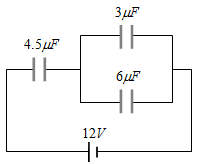
In the circuit shown in the figure, the potential difference across the 4.5mF capacitor is

(a)  

(b) 4 volts

(c) 6 volts

(d) 8  volts

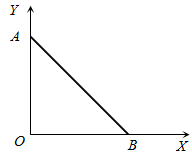
As per this diagram a point charge +q is placed at the origin O. Work done in taking another point charge -Q  from the point A [co-ordinates (0, a) ] to another point B [co-ordinates (a, 0)] along the straight path AB is

(a) Zero  

(b)  

(c)

(d)

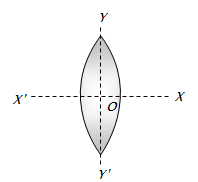
An equiconvex lens is cut into two halves along (i) XOX¢ and (ii) YOY¢ as shown in the figure.  Let f, f ¢, f ¢¢ be the focal lengths of the complete lens, of each half in case (i), and of each half in case (ii), respectively

Choose the correct statement from the following


(a)  

(b)  

(c)

(d)  

When a resistor of 11 W is connected in series with an electric cell, the current flowing in it is 0.5 A.  Instead, when a resistor of 5 W is connected to the same electric cell in series, the current increases by 0.4 A. The internal resistance of the cell is

(a)  1.5 W    

(b) 2 W

(c)  2.5 W

(d) 3.5 W

What is the angle of dip at the magnetic poles?