MCQ
At ${25\,^o}C$ Ethylene glycol is a
  • A
    Solid compound
  • Liquid
  • C
    Gas
  • D
    Brown solid

Answer

Correct option: B.
Liquid
b
It’s Obvious.

Need a full question paper?

Generate a complete, print-ready paper with questions like this in minutes — across 16+ boards, with answer keys.

Start Generating Free

Similar questions

$C{{H}_{3}}-{{(C{{H}_{2}})}_{3}}-OH\xrightarrow[E{{T}_{3}}N]{\begin{matrix}
   \,\,\,\,\,\,O  \\
   \,\,\,\,\,\,||  \\
   C{{H}_{3}}-S-Cl  \\
   \,\,\,\,\,||  \\
   \,\,\,\,\,O  \\
\end{matrix}}(A)\xrightarrow{\overset{14}{\mathop{KCN}}\,}(B)\xrightarrow{{{H}_{3}}{{O}^{\oplus }}}(C)$

Product $(C)$ is

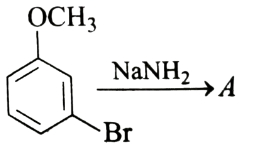
Identify $A$ and predict the type of reaction.

 $\xrightarrow{{NaN{H_2}}}\,A$

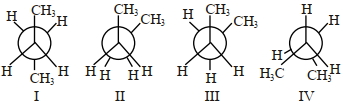
Arrange the following conformational isomers of $n-$butane in order of their increasing potential energy :
Given below are two statements:
Statement-I: The orbitals having same energy are called as degenerate orbitals
Statement-II: In hydrogen atom, 3p and 3d orbitals are not degenerate orbitals.
In the light of the above statements, choose the most appropriate answer from the options given
If the CFSE of $\left[ Ti \left( H _2 O \right)_6\right]^{3+}$ is $-96.0\,kJ / mol$, this complex will absorb maximum at wavelength $........nm$. (nearest integer)

Assume Planck's constant $( h )=6.4 \times 10^{-34}\,Js$ Speed of light $( c )=3.0 \times 10^8\,m / s$ and Avogadro's constant $\left( N _{ A }\right)=6 \times 10^{23} / mol$

In which one of the following metal carbonyls, $\mathrm{CO}$ forms a bridge between metal atoms?
Electronic configuration of four elements $\mathrm{A}, \mathrm{B}, \mathrm{C}$ and D are given below :
(A) $1 \mathrm{~s}^{2} 2 \mathrm{~s}^{2} 2 \mathrm{p}^{3}$
(B) $1 s^{2} 2 s^{2} 2 p^{4}$
(C) $1 \mathrm{~s}^{2} 2 \mathrm{~s}^{2} 2 \mathrm{p}^{5}$
(D) $1 \mathrm{~s}^{2} 2 \mathrm{~s}^{2} 2 \mathrm{p}^{2}$
Which of the following is the correct order of increasing electronegativity (Pauling's scale)?
When primary amine is heated with $NaNO_2/HCl$

$R-NH_2$  $\xrightarrow[{HCl}]{{NaN{O_2}}}$ $..................$

(a gas is evolves with brisk effervescene is)

Propane molecule on chlorination under photochemical condition gives two di-chloro products, " $x$ " and " $y$ ". Amongst " $x$ " and " $y$ ", " $x$ " is an optically active molecule. How many tri-chloro products (consider only structural isomers) will be obtained from " $x$ " when it is further treated with chlorine under the photochemical condition?
What is entropy of vaporisation of water at $100\,^oC$ , If molar heat of vaporisation is $9710\,cal/mol$ .........$cal/K/mol$