- ✓Directly proportional to the concentration
- BInversely proportional to the concentration
- CDirectly proportional to the square of the concentration
- DDirectly proportional to the square root of the concentration
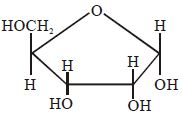
Osmotic pressure ($p$) of a solution at a constant temperature is directly proportional to its concentration $C$ (i.e., moles per litre) $C =\frac{ n }{ V }$
where $n$ is the number of moles of solute present in volume $V$ litres of solution.So osmatic pressure depends on molar mass.
Hence option $A$ and $B$ are correct, remaining does not make any sense so wrong options.
Generate a complete, print-ready paper with questions like this in minutes — across 16+ boards, with answer keys.
$\operatorname{cis}-\left[\mathrm{Cr}(\mathrm{ox})_2 \mathrm{Cl}_2\right]^{3-},\left[\mathrm{Co}(\mathrm{en})_3\right]^{3+}$
$\operatorname{cis}-\left[\mathrm{Pt}(\mathrm{en})_2 \mathrm{Cl}_2\right]^{2+}, \text { cis }-\left[\mathrm{Co}(\mathrm{en})_2 \mathrm{Cl}_2\right]^{+}$
$\text {trans }-\left[\mathrm{Pt}(\mathrm{en})_2 \mathrm{Cl}_2\right]^{2+}, \text { trans }-\left[\mathrm{Cr}(\mathrm{ox})_2 \mathrm{Cl}_2\right]^{3-}$

