Question
Balance the following equation stepwise.
$H_2S_2O_{7(l)} + H2O_{(l)}\rightarrow H_2SO_{4(l)}$

Answer

Step $1:$ Write the equation and then count the number of atoms of each element on the $R.H.S.$ and $L.H.S.$ of the arrow.
$H_2S_2O_7+ H_2O \rightarrow H_2SO_4$_______________$(1)$
Elements No. of atoms in reactants (L.H.S.) No. of atoms in products (R.H.S.)
$H$ $4$ $2$
$S$ $2$ $1$
$Ο$ $8$ $4$
Step $2:$ Check whether no. of atoms on both sides is equal. It is seen from the above table number of atoms of all the elements on the two sides are not the same.
Step $3:$ To balance the number of atom on both sides. We write coefficient $2$ for $H_2SO_4$.
Now the equation becomes.
$H_2S_2O_{7(l)} + H_2O_{(l)} \rightarrow 2H_2SO_{4(l)}$_______________$(2)$
Now see that the number of atoms of each. elements are equal on both sides.
Elements No. of atoms in reactants No. of atoms in products
$H$ $4$ $4$
$S$ $2$ $2$
$O$ $8$ $8$
Hence, the equation $(2)$ is a balanced equation.

Need a full question paper?

Generate a complete, print-ready paper with questions like this in minutes — across 16+ boards, with answer keys.

Start Generating Free

Similar questions

Determine how far an object must be placed in front of a converging lens of focal length 10cm in order to produce an erect (upright) image of linear magnification 4.
A metal can be hammered into a thin sheet. Explain why.
An eye has a near point distance of 0.75m. What sort of lens in spectacles would be bneeded to reduce the near point distance to 0.25m? Also calculate the power of lens required. Is this eye long-sighted or short sighted?
A person got his eyes tested by an optician. The prescription for the spectacle lenses to be made reads:
Left eye: +2.50D, Right eye: +2.00D
  1. State whether these lenses are thicker in the middle or at the edges.
  2. Which lens bends the light rays more strongly?
  3. State whether these spectacle lenses will converge light rays or diverge light rays.
Complete the following table:
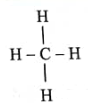
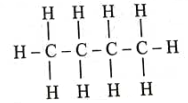
Straight chain of carbon compoundStructural formulaMolecular formulaName
CImage$CH _4$Methane
C - C_______________________________Ethane
C - C - C________________$C _3 H _8$________________
C - C - C - CImage________________________________
Find the amount of heat required to convert 10 g of water at 100 °C into steam. (Specific latent heat of vaporization of water = 540 cal/g)
Calculate the amount of heat required to convert 5 g of ice of 0 °C into water at 0 °C. (Specific latent heat of fusion of ice = 80 cal/g)
Define the following in terms of gain or loss of hydrogen with one example:
  1. Oxidation.
  2. Reduction.
Calculate the amount of heat required to convert 15 g of water at 100 °C into steam. (Specific latent heat of vaporization of water = 540 cal/g)
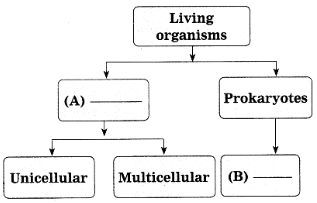
Complete the following flow-chart.
Image